RSS

Will Rising Oil Prices Stall the 2026 Spring Housing Market? What GTA Homeowners Need to Know

If you’ve filled up your car recently, you’ve probably noticed it — gas prices are climbing again.

But rising oil prices don’t just affect your commute. They can have a direct ripple effect on mortgage rates, inflation, and the Greater Toronto Area housing market.

With the March 18 Bank of Canada interest rate announcement approaching, many homeowners and buyers across the GTA are asking the same question:

Could rising energy prices slow down the 2026 spring housing market?

Let’s break down what’s really happening — and what it means if you’re planning to buy, sell, or renew your mortgage in Ontario.


The Inflation Connection: Why Oil Prices Matter to the Bank of Canada

Oil is one of the strongest drivers of inflation in the global economy.

When crude oil prices rise, it increases the cost of transportation, manufacturing, and construction. That means everything from groceries and shipping to building materials and home renovations becomes more expensive.

The Bank of Canada closely monitors inflation, with a target of 2% annually.

When energy prices surge, inflation tends to follow. If inflation remains elevated, the Bank of Canada may decide to keep interest rates higher for longer in order to slow the economy.

Many economists were expecting rate cuts in 2026, but a spike in energy prices could delay that timeline.

For homeowners and buyers in the Greater Toronto Area real estate market, that matters a lot — because mortgage rates follow these policy signals.


How Rising Oil Prices Can Impact the GTA Housing Market

Higher oil prices don’t just affect macroeconomics — they directly impact buyer behaviour and housing affordability in Toronto and surrounding areas.

Here are three key effects already showing up in the 2026 GTA housing market.

1. Buyer Hesitation

When households spend more on gas, heating, and everyday expenses, their purchasing power shrinks.

This can cause potential buyers to pause their home search while they wait for lower mortgage rates or better affordability conditions.

That hesitation is one reason the 2026 spring market started slower than expected.

2. Increased Negotiating Power for Buyers

According to the Toronto Regional Real Estate Board, inventory levels in the Greater Toronto Area housing market have increased in several segments — particularly condos.

When inventory rises and buyers become cautious, the balance of power shifts.

That creates stronger negotiating opportunities for buyers, especially those who are financially prepared and pre-approved.

3. Rising Construction Costs

Oil also plays a major role in construction and development costs.

Many building materials are petroleum-based, including:

→ PVC piping

→ Roofing shingles

→ Insulation

→ Certain flooring and siding materials

When oil prices rise, construction costs rise too.

This is one of the reasons new home prices remain high, even when sales activity slows.


Mortgage Strategy in 2026: Fixed vs Variable Rates

For homeowners approaching a mortgage renewal in Ontario, rising oil prices add another layer of uncertainty.

Here’s how it affects mortgage strategy.

Fixed Mortgage Rates

Fixed rates are primarily influenced by Government of Canada bond yields.

If investors believe inflation will remain elevated because of higher energy costs, bond yields tend to stay higher, which keeps fixed mortgage rates elevated.

Variable Mortgage Rates

Variable rates move directly with the Bank of Canada policy rate.

The big question right now is whether policymakers will:

→ Look through the energy spike as temporary, 

or

→ Keep interest rates elevated longer to control inflation.

All eyes are on the March 18 Bank of Canada announcement.


The Bottom Line for the 2026 GTA Spring Market

The Greater Toronto Area housing market in 2026 is shaping up to be a strategic market — not a runaway market.

We’re seeing:

→ More inventory in certain segments

→ Buyers waiting for rate clarity

→ Sellers adjusting expectations

→ Inflation pressures still influencing mortgage rates

While rising oil prices can create short-term economic pressure, they also create opportunities for informed buyers and strategic homeowners.

In markets like this, timing and preparation matter more than speculation.


Final Thoughts

If you’re planning to buy a home, sell property, refinance, or renew your mortgage in the GTA, understanding how inflation, oil prices, and interest rates interact is critical.

Real estate decisions today require looking at both sides of the equation — housing trends and mortgage strategy.

That’s exactly where having guidance from someone who understands both the real estate market and the mortgage landscape can make a significant difference.

From Loan to Home — Your Trusted Path to Ownership. 🏡

Read

How Credit Card Limits Impact Your Credit Score in Canada: The Truth About Credit Utilization

If you are planning to buy a home in the Greater Toronto Area, renew your mortgage, or improve your financial profile, understanding how credit card limits affect your credit score in Canada is one of the smartest financial moves you can make.

Many Canadians believe that having a high credit card limit is dangerous or encourages overspending. In reality, when managed properly, higher credit limits can actually help improve your credit score.

For buyers preparing to enter the GTA real estate market, this one factor can make a significant difference when lenders evaluate your mortgage approval and borrowing power.

The strategy behind this is called credit utilization.


What Is Credit Utilization and Why It Matters for Your Credit Score

Credit utilization refers to the percentage of your available credit that you are currently using.

In Canada, credit scoring models treat credit utilization as a major factor when calculating your credit score. In fact, it typically accounts for about 30% of your total credit score.

Credit bureaus such as Equifax Canada and TransUnion Canada use this ratio to determine how responsibly you manage credit.

Lenders look closely at this number because it reveals how dependent you are on borrowed money.

For example:

→If your balances are consistently close to your credit limits, lenders may view you as a higher financial risk.

→ If your balances stay low compared to your available credit, it signals responsible credit management.

This is why two individuals with similar incomes can have very different credit scores in Canada.


How Credit Utilization Is Calculated

The formula used to calculate credit utilization is straightforward:

Credit Utilization = (Total Credit Card Balances ÷ Total Credit Limits) × 100

For example:

If you have a credit card with a $10,000 limit and your current balance is $2,000, your credit utilization is 20%.

This percentage is what credit bureaus analyze when evaluating your credit behavior.

Lower utilization generally results in a stronger credit score and a more favorable profile for lenders.


Why Higher Credit Card Limits Can Improve Your Credit Score

It may sound counterintuitive, but having a higher credit limit can actually help strengthen your credit score — as long as your spending does not increase.

Here are two key reasons why.

→ Lower Utilization Automatically Improves Your Ratio

→ Your credit limit is the bottom number in the credit utilization calculation.

When your credit limit increases and your spending remains the same, your utilization percentage automatically drops.

Lower utilization signals to lenders that you manage credit responsibly.


More Financial Breathing Room

Higher credit limits also give you more flexibility for everyday spending without pushing your utilization too high.

For example:

A $2,000 balance on a $5,000 limit equals 40% utilization, which may negatively impact your credit score.

The same $2,000 balance on a $15,000 limit equals 13% utilization, which is far more favorable for credit scoring.

For many buyers preparing for mortgage approval in the Greater Toronto Area, lowering credit utilization is one of the fastest ways to strengthen their financial profile.


3 Smart Strategies to Improve Credit Utilization

If you are planning to apply for a mortgage or major loan in Canada, optimizing your credit utilization can help improve your credit score.

Here are three practical strategies.

1. Keep Your Utilization Below 10%

While many financial experts recommend staying below 30% utilization, borrowers with the highest credit scores typically keep their utilization below 10%.

Lower balances compared to your available credit demonstrate strong financial discipline.

2. Request a Credit Limit Increase

If you have a strong payment history, requesting a credit limit increase can instantly lower your utilization rate.

This works best when you avoid increasing your spending after the limit increase.

3. Pay Your Balance Before the Statement Closing Date

Many people believe credit card balances are reported on the payment due date, but most issuers actually report balances on the statement closing date.

Making a payment a few days before your statement closes ensures a lower balance is reported to the credit bureaus.

This small adjustment can have a noticeable impact on your credit score over time.


Credit Utilization Ranges and Their Impact on Your Credit Score

Understanding these ranges can help you maintain a strong credit profile.


Why Credit Utilization Matters When Applying for a Mortgage

If you are preparing to buy a home in the Greater Toronto Area, your credit score plays a major role in determining:

→ Mortgage approval eligibility

→ Interest rates offered by lenders

→ Your overall borrowing capacity

Improving your credit utilization before applying for a mortgage can significantly strengthen your financial profile and may help you qualify for better mortgage rates.

For many buyers entering the GTA housing market, this strategy is one of the simplest ways to increase mortgage readiness.


The Bottom Line

Your credit card limit is not just a spending cap — it is an important part of your financial reputation.

By understanding and managing credit utilization, you can strengthen your credit score, demonstrate responsible financial behavior to lenders, and improve your chances of securing favorable mortgage financing.

For anyone planning to buy a home, refinance a mortgage, or improve their credit score in Canada, mastering credit utilization is one of the most effective financial strategies available.

From Loan to Home — Your Trusted Path to Ownership. 🏡

Read

Why Fixed Mortgage Rates Are Rising in Canada | March 2026 Mortgage Market Update

If you’re approaching a mortgage renewal in 2026, you’re not alone.

Nearly one-third of Canadian mortgages are set to renew this year, and many homeowners across the Greater Toronto Area are noticing something unexpected: fixed mortgage rates are creeping higher—even though the Bank of Canada hasn’t raised its policy rate.

So what’s actually driving this shift?

As we approach the March 18, 2026 Bank of Canada announcement, here’s what GTA homeowners and buyers need to understand about fixed mortgage rates, bond yields, and borrowing power in today’s market.


1. Fixed Mortgage Rates Follow Bond Yields — Not the Bank of Canada

One of the biggest misconceptions in the mortgage world is that the Bank of Canada directly sets fixed mortgage rates.

It doesn’t.

Fixed mortgage rates are primarily driven by Government of Canada 5-year bond yields.

In the past few weeks, global geopolitical tensions—particularly involving Iran—have pushed oil prices higher, creating volatility in financial markets. Investors have responded by adjusting their expectations around inflation and economic stability.

The result?

Canada’s 5-year bond yield has climbed from roughly 2.6% to above 3.0% in just a few weeks.

And when bond yields rise, lenders typically raise fixed mortgage rates almost immediately to protect their margins.


2. Canada’s 2026 Mortgage Renewal Cliff

Another major factor putting pressure on the mortgage market is what economists are calling Canada’s “renewal cliff.”

Millions of homeowners who locked in ultra-low fixed rates during 2020–2021 are now approaching renewal.

Many of those mortgages were secured at 1.5%–2% rates.

Today’s rates are significantly higher.

For some homeowners in the Greater Toronto Area, this could mean monthly payment increases of 15% to 20% when their mortgage renews.

Because lenders know a massive wave of renewals is coming, many are becoming less aggressive with promotional fixed-rate pricing, waiting to see how the market evolves.


3. Trade Uncertainty Is Keeping Inflation “Sticky”

Another layer affecting the mortgage market is international trade uncertainty.

The upcoming CUSMA review between Canada, the United States, and Mexico is creating concern around potential tariffs and economic disruption.

When global trade uncertainty rises, inflation tends to stay stubbornly high.

That puts the Bank of Canada in a difficult position.

While many economists expected multiple rate cuts in 2026, the central bank may choose to hold the overnight rate around 2.25% longer than anticipated to protect the Canadian dollar and keep inflation under control.

And when inflation expectations remain elevated, bond yields—and fixed mortgage rates—tend to rise as well.


What This Means for GTA Homeowners and Buyers

Despite ongoing uncertainty, the Spring 2026 real estate market in the Greater Toronto Area is opening a rare strategic window.

Across the GTA, inventory is beginning to tighten while many buyers remain on the sidelines waiting for clearer direction on mortgage rates. This hesitation on both sides is creating a temporary stalemate in the market—one that is quietly shifting negotiating power back toward buyers.

For homeowners approaching a mortgage renewal in the GTA, this is also a key moment to reassess financing strategies, explore equity opportunities, and position themselves ahead of the next shift in Toronto’s housing market.

The bottom line: this pause between buyers and sellers is creating more negotiating leverage than the GTA market has offered in years.


If Your Mortgage Is Renewing in 2026

Do not wait until the last minute.

Most lenders allow rate holds up to 120 days before renewal, which means you can secure a rate today while still keeping your options open.

With bond yields moving quickly, waiting until the 30-day mark could expose you to higher fixed rates.

Starting early gives you time to:

• Compare lenders

• Explore refinancing opportunities

• Lock in protection against further bond volatility


If You’re Buying a Home in 2026

One interesting shift in today’s mortgage market is that variable rates are once again undercutting fixed rates.

Historically, that’s been the norm—but it disappeared during the rate-hike cycle of 2022–2023.

For some buyers, a variable or adjustable mortgage may provide more flexibility as the rate cycle evolves.

The key is running the numbers based on your risk tolerance, timeline, and financial goals.


Final Thoughts

The biggest takeaway from the March 2026 mortgage market is this:

Mortgage rates don’t move in isolation.

They respond to global geopolitics, bond markets, inflation expectations, and economic policy.

If you’re renewing or buying this year, understanding these moving pieces can help you protect your borrowing power and make smarter decisions in a changing market.

✅ Mortgage Renewal in 2026?

Start planning early. The right strategy today could save you thousands over the life of your mortgage.

From Loan to Home — Your Trusted Path to Ownership. 🏡

Read

The 2026 GTA Spring Market: The “Sidelined Buyer” Standoff

As we move into the second week of March, the GTA real estate market is sitting in a very interesting standoff.

On one side, there are over 100,000 buyers sitting on the sidelines, waiting for what they believe is the “bottom” of the market.

On the other side, we have sellers hesitating to list, which has led to a 17.7% drop in new listings year-over-year as of February 2026.

But here’s the truth most headlines are missing: For strategic homeowners, this quieter market is actually a huge opportunity.

And the next few weeks could set the tone for the entire spring market.


1. The Big Date Everyone Is Watching: March 18, 2026

Right now, every real estate conversation in Ontario circles back to one date: March 18, the next Bank of Canada rate announcement.

The current policy rate sits at 2.25%, and most analysts are expecting the Bank to hold.

But here’s the thing: Markets don’t just react to rate changes — they react to certainty.

A hold signals that the aggressive rate hikes are firmly behind us. And when buyers feel confident that rates are stabilizing, they start moving.

My expectation?

That announcement could act as the starting gun for thousands of sidelined buyers to re-enter the market.

For sellers, timing matters. Listing shortly after that announcement means your home hits the market right when buyer confidence spikes.


2. The 17% Advantage Sellers Aren’t Talking About

Most headlines focus on sales being down. But the real story right now is supply.

According to the Toronto Regional Real Estate Board, new listings dropped 17.7% in February.

That matters. Because fewer listings means less competition.

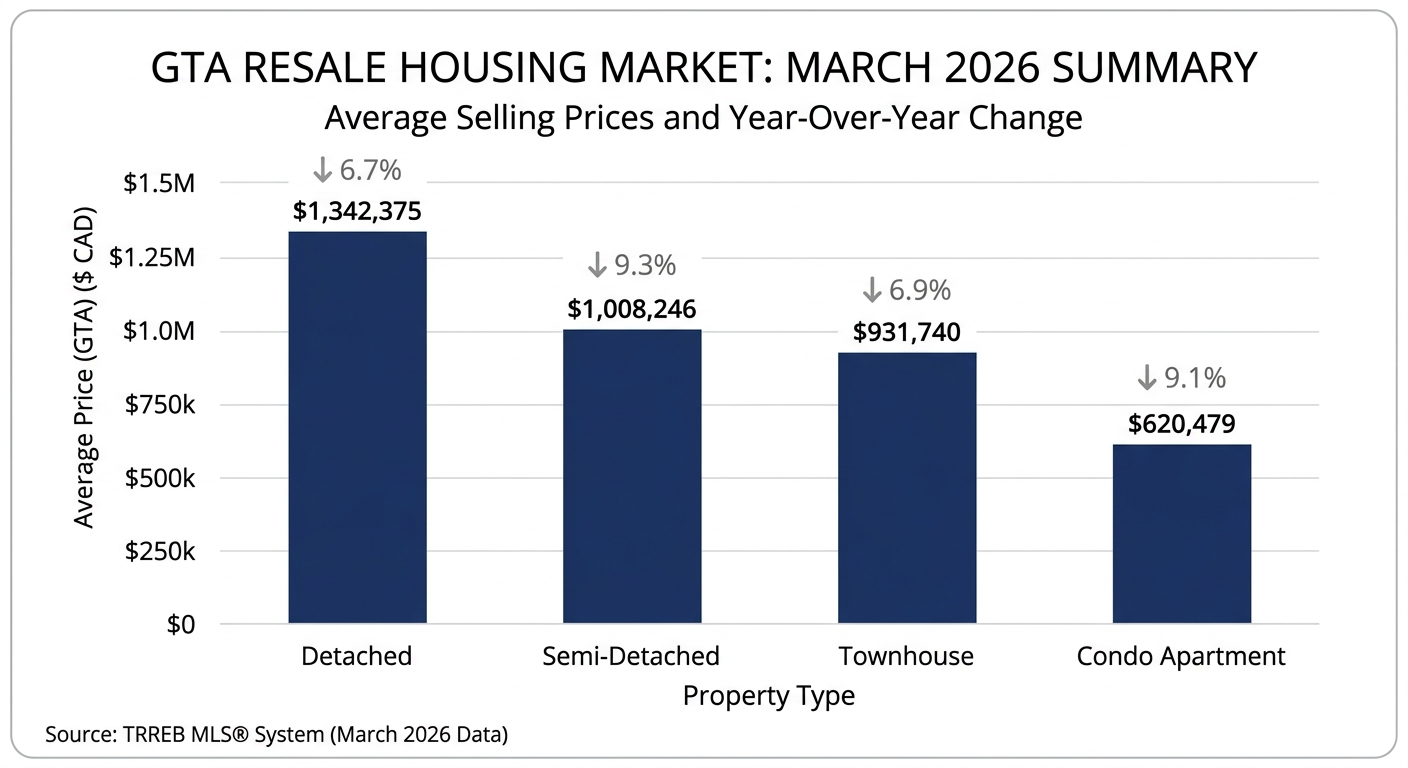
The average GTA home price is currently sitting around $1,008,968, and well-priced homes that are properly prepared for market are still performing extremely well.

Homes that are staged and marketed to 2026 expectations — warm tones, natural light, lifestyle presentation — are still seeing strong activity, and in some pockets, even multiple offers.

In other words: buyers are cautious, but they are still buying the right homes.


3. Mortgage Readiness Matters More Than Ever

One advantage I bring to my clients is that I see both sides of the transaction.

As someone who is licensed in both mortgages and real estate, I see deals from the inside — and right now, financing is where many transactions succeed or fail.

Even though rates have stabilized, buyers still need to qualify under the Mortgage Stress Test, which means qualifying around 5.25% or higher.

That’s why simply accepting an offer isn’t enough anymore.

In this market, many offers will still include financing conditions, and the last thing any seller wants is a deal falling apart days before closing.

This is why I always focus on verifying buyer readiness — making sure the person making the offer isn’t just interested, but actually capable of closing.


4. The Market Is Splitting: Detached vs. Condos

Another trend we’re seeing across the GTA is a split market.

Detached and semi-detached homes continue to hold strong. Families are still prioritizing space, and these properties remain the most resilient.

Condos, however, are seeing more inventory, which gives buyers a little more negotiating power.

If you’re selling a condo in 2026, marketing matters more than ever. Your listing needs to stand out with strong digital exposure, lifestyle branding, and polished presentation.


The Spring 2026 Sweet Spot

There is a very specific window forming right now.

The period between the March 18 rate announcement and the April/May listing surge could be the sweet spot of the spring market.

You benefit from renewed buyer confidence while avoiding the wave of new listings that typically hit in late spring.

For sellers who position their home correctly, this timing can make a significant difference.


If You're Planning a Move This Year

There are two ways I can help you right now:

1️⃣ GTA Market Snapshot

I can provide a simple breakdown of the Sales-to-New-Listings Ratio for your specific city or neighbourhood so you can see exactly what the market looks like where you live.

2️⃣ Mortgage & Equity Review

If you're thinking about selling and moving up, I can run the numbers to show how your current equity works with today’s mortgage rates.

No pressure — just clarity so you can make the right move when the time is right.

From Loan to Home — Your Trusted Path to Ownership. 🏡

Read

Why 30% of GTA Real Estate Deals Are Failing at Closing — And How to Make Sure Yours Isn’t One of Them

You find the perfect home.
Your offer gets accepted.
Your family starts packing boxes.

Then ten days before closing, you get the call no buyer ever wants:

“Your financing fell through.”

Unfortunately, this situation is becoming far more common in the 2026 GTA real estate market. While the market is stabilizing overall, certain segments—especially condos and pre-construction properties—are seeing failure-to-close rates approaching 30%.

Most buyers are shocked when this happens because they believe they were already approved for the mortgage.

But in many cases, there’s a huge difference between a mortgage pre-approval and a firm mortgage commitment.

The biggest issue?
The person helping you buy the home is usually not the same person responsible for making sure the financing actually works.

That disconnect is where deals begin to fall apart. As someone who is both a Licensed Real Estate Agent and Mortgage Agent, I see this problem all the time. When the real estate strategy and the mortgage strategy aren’t aligned from the beginning, buyers can run into serious issues later in the transaction.

Here are the three biggest reasons deals are failing at closing in today’s market—and how to protect yourself.


1. The Appraisal Gap (The #1 Deal Killer)

As prices adjust in parts of the GTA, some bank appraisals are coming in below the agreed purchase price.

Here’s how it usually plays out.

A buyer agrees to purchase a home for $800,000, but when the lender orders the appraisal, the property is valued at $750,000.

The bank will only finance based on the lower appraised value. That means the buyer suddenly needs to come up with an additional $50,000 in cash to close the deal.

For many buyers, that simply isn’t possible.

Without identifying this risk early, buyers can find themselves scrambling just days before closing—and in some cases, their deposit is at risk.

2. The Pre-Approval Trap

Many buyers enter the market with a pre-approval from a bank and assume they’re fully approved.

In reality, many pre-approvals are simply rate holds based on limited information. When the lender eventually reviews the full file, they take a much deeper look at:

• income verification
• debt-to-income ratios
• credit usage
• employment stability
• the property appraisal

This deeper review often happens after the offer has already been accepted. That’s when unexpected problems can appear.

A traditional real estate agent focuses on helping you find the right property and negotiate the purchase. However, they often don’t see the financial details lenders evaluate later in the process.

Because I’m also a mortgage agent, I review the financing side before we even write the offer. I’m looking at your file the same way an underwriter will—so we can identify potential issues early and make sure the numbers actually work.

3. The “Game of Telephone”

A typical real estate transaction involves multiple professionals:
• the real estate agent
• the mortgage broker
• the lender
• the lawyer
• the appraiser

When everyone is working on different timelines, communication gaps can happen.

Sometimes deals fall apart simply because of small issues like:
• a missing document
• a delayed appraisal
• a late condo status certificate
• a last-minute lender condition

Suddenly funding is delayed or pulled days before closing.

It’s stressful for buyers and completely avoidable when the process is better coordinated.

How I Help Ensure My Clients Actually Close

As both a Real Estate Sales Representative and Licensed Mortgage Agent, I offer something most buyers don’t get: one coordinated strategy for both the home purchase and the financing.

Here’s what that looks like in practice.

Financial Verification Before We Shop

I don’t just rely on a pre-approval. I review the file to make sure it can actually pass today’s lender guidelines and stress test before we even start looking at homes.

Offers Based on Real Lending Numbers

I guide clients based on what lenders are realistically approving and what properties are likely to appraise for, not just the listing price.

One Coordinated Process

Because I manage both the real estate and mortgage side of the transaction, everything stays aligned from offer to closing.

There are fewer communication gaps, fewer surprises, and a much smoother path to getting the keys.


The 2026 Market Tip Buyers Need to Know

In today’s market, closability matters more than offer price.

Sellers and listing agents are becoming more cautious, and many are prioritizing buyers who can demonstrate strong financing and a solid closing strategy behind their offer.

Having someone who understands both the real estate side and the mortgage side of the transaction can make a major difference.

Because finding the right home is important. But making sure you actually close on it is everything.


Don’t Become a Statistic

The GTA housing market in 2026 leaves very little room for mistakes.

Whether you’re buying a condo, pre-construction property, or detached home, it’s critical to understand both the property side and the financing side of the transaction.

When those two pieces are aligned from the start, the entire process becomes stronger—from the offer you write to the day you pick up the keys.

And at the end of the day, the goal isn’t just getting your offer accepted. It’s making sure you successfully close and walk into your new home with confidence. 

From Loan to Home — Your Trusted Path to Ownership. 🏡

Read

GTA Real Estate Market Update: Why February 2026 Is a Turning Point for Buyers and Sellers

The Greater Toronto Area (GTA) real estate market showed signs of significant tightening in February 2026. While headlines often focus on the dip in total sales, the real story is the shrinking inventory and the massive “pent-up demand” quietly building behind the scenes.

If you’re navigating the Toronto housing market this year, understanding these latest numbers from the Toronto Regional Real Estate Board (TRREB) is essential for making smart moves.


The Numbers: Sales vs. Inventory Crunch

Here’s what February 2026 looked like:

• Home Sales: 3,868 transactions (down 6.3% from February 2025)

• New Listings: 10,705 (down a staggering 17.7% year-over-year)

• Average Selling Price: $1,008,968 (down 7.1% from last year)

• MLS® HPI Composite: down 7.9% year-over-year

The takeaway? New listings are dropping nearly three times faster than sales. This supply shortage means that once prices stabilize, competition is likely to heat up fast.


Why GTA Homeowners Are Holding Back

Ipsos polling shows that many potential sellers are waiting on more economic certainty or positive news on the trade front.

TRREB President Daniel Steinfeld explains: "If new listings continue to trend lower through the spring, competition between homebuyers will increase, supporting home prices and a recovery in sales."

This cautious approach from sellers is creating an interesting market dynamic: fewer homes for sale, but thousands of buyers ready to act.


The 100,000 Buyer Wave

One of the most surprising stats? TRREB Chief Information Officer Jason Mercer estimates over 100,000 buyers are currently on the sidelines, waiting for the right moment.

This “pent-up demand” could drive a surge in sales in the second half of 2026—and likely into 2027.


What This Means for You

For Buyers: This could be a window of opportunity. With the MLS® Home Price Index down month-over-month, there’s a temporary reprieve in pricing. But with inventory dropping fast, the early spring market could close that window quickly.

For Sellers: Less competition is your friend. With new listings down 17.7%, your home stands out. Price it right, and thousands of eager buyers will take notice.


The “Missing Middle” Crisis

TRREB CEO John DiMichele points to a growing need for “missing middle” housing—the gap between high-rise condos and single-family homes. For investors and developers, this segment is where long-term opportunity lies in the GTA.


Bottom Line

The GTA market is in a “wait and see” phase—but the data points to a busy second half of 2026. Whether you’re looking for a condo or a detached home, having a data-driven strategy is the only way to win.

Curious about how these February stats affect your neighbourhood? Reach out—I’d be happy to give you the inside scoop on your local market.

From Loan to Home — Your Trusted Path to Ownership. 🏡

Read

Why Emotion Is Shaping the 2026 Ontario Real Estate Market (And How to Navigate It)

If you’ve been watching the Ontario market lately, you can feel it. It’s not just about rates. It’s not just about prices. It’s about uncertainty.

Between shifting mortgage policies, headlines about affordability, and constant notifications from real estate apps… buying or selling a home in 2026 feels heavier than it used to.

And here’s the truth:

In this market, the math is only half the story.

The other half? Emotion.

As both a licensed Realtor and Mortgage Agent here in Ontario, I see it every day. The clients who succeed aren’t the ones who try to “time the market perfectly.” They’re the ones who move with clarity.

Let’s talk about the three biggest “market moods” I’m seeing in 2026.


1. Strategic Joy: Reclaiming Your Momentum

A lot of buyers have been waiting. Waiting for rates to drop. Waiting for inventory to rise. Waiting for the “perfect” headline.

Strategic Joy is when you decide: “I’m done waiting. I’m ready to move forward — intelligently.”

On the Real Estate Side: We focus on lifestyle first. 

→Does this home reduce your commute?

→ Does it give your family the space you actually need right now?

On the Mortgage Side: We build a long-term affordability plan — not just find you a rate. 

→ Payment comfort. 

→ Cash-flow clarity. 

→ Exit strategy.

You move forward knowing exactly what you’re stepping into.

That’s confidence — not impulse.


2. Information Overload (and Analysis Paralysis)

If you’re mentally exhausted from checking listings and reading rate predictions… you’re not alone. Being over-informed can actually keep you stuck. Scrolling isn’t strategy.

Here’s how we solve that: Instead of sending you 50 listings, I send you the top 3 that truly match your criteria and budget strategy.

Instead of vague mortgage timelines, you get a clear, step-by-step roadmap:

• What happens first

• What documents you need

• What to expect next

• What could go wrong (and how we prevent it)

Clarity reduces stress. Structure creates confidence.


3. Guarded Hope: “I Want To Buy… But Am I Overpaying?”

This is the biggest emotion in 2026. Clients want to move forward — but they’re cautious. 

And honestly? That’s smart.

With conflicting headlines about the Canadian housing market, it’s normal to feel “optimistically suspicious.”

Here’s what builds trust: 

• Deep-dive comparables — not surface-level app estimates

• Honest pricing conversations (even when it’s uncomfortable)

• Transparent mortgage projections — worst-case and best-case scenarios

• Real numbers, not guesses

When your mortgage and real estate strategy are aligned, the unknowns shrink dramatically.


What Actually Adds Value in 2026

Anyone can look up a house price online. What you can’t Google is interpretation, negotiation strategy, and calm judgment under pressure.

Here’s where we make the difference:

1. Translating Data Into Decisions

We turn rate updates and market stats into clear action steps.

2. Reducing Friction

From pre-approval to closing, we streamline the process so you’re not chasing paperwork or second-guessing timelines.

3. Being the Steady Hand

When the market reacts emotionally, we stay strategic — so you don’t make a decision you regret six months later.


Final Thoughts: Your Life Shouldn’t Be On Hold

The Ontario real estate market will always move in cycles.

But your family plans, your lifestyle goals, your financial growth — those matter more than a headline.

2026 isn’t about perfect timing. It’s about informed timing.

With clarity. With transparency.

With a financial plan that supports your next chapter.


Ready to start your 2026 home journey?

Whether you need:

→ A mortgage pre-approval strategy

→ A pricing review on your current home

→ Or a real conversation about whether now makes sense for you

Let’s build the plan properly — from both sides. You don’t have to navigate this market alone.

From Loan to Home — Your Trusted Path to Ownership. 🏡
Read

Beyond the Credit Score: How to Tell a Lender-Friendly Income Story (And Get Approved Faster)

I’ve been in this business long enough to see a pattern most buyers never expect. I’ve seen six-figure entrepreneurs get declined for mortgages. And I’ve seen modest-income earners get approved with zero stress. The difference was never the credit score. It was the paperwork story.

As both your Realtor and Mortgage Agent, my role goes far beyond submitting documents. My job is to make sure your financial story makes sense to a lender the very first time they read it.

Because here’s the truth:

👉 Mortgages don’t fall apart because of bad income. They fall apart because of unclear income. A smooth mortgage approval isn’t luck. It’s clarity, consistency, and strategy.


Why Lenders Care About Your “Story” (Not Just Your Numbers)

Lenders don’t meet you. They don’t know how hard you work. They don’t know your business potential or future growth.

All they see is paper. Your application is reviewed like a file in a courtroom—every number needs context, every gap needs an explanation, and every inconsistency raises questions.

If your documents tell a clean, logical story → approvals move fast.

If they don’t → delays, conditions, or outright declines.


The 3 Biggest “Approval Killers” I See Every Week

These are the most common mistakes that derail otherwise strong buyers—and how we fix them before they become a problem.

1️⃣ The Mystery Deposit

Large or frequent deposits that aren’t clearly explained immediately trigger lender red flags.

Why lenders worry:

Unverified funds could be borrowed money, undisclosed debt, or temporary cash inflows.

The fix:

I make sure every deposit is documented—transfers, bonuses, business income, or gifts. Gifted funds? We prep gift letters and source documents upfront, not last minute.

2️⃣ Credit Spikes Before Closing

New cars. Furniture financing. “Buy now, pay later” plans.

This is one of the fastest ways to kill an approval after you’ve already been pre-approved.

Why lenders worry:

New debt changes your debt-to-income ratios instantly—even days before closing.

The fix:

Simple rule: No new debt until you have the keys.

I walk clients through what not to do so nothing surprises underwriting.

3️⃣ The Income Mismatch

Your paystub says one number. Your T4 says another.

Your tax return says something else. That inconsistency makes lenders nervous—even if you earn more than enough.

Why lenders worry:

They need to understand which income is stable, ongoing, and usable.

The fix:

We proactively prepare a Letter of Explanation that clearly bridges the gap before the lender asks. No guessing. No back-and-forth. No delays.


The “Enough Info” Checklist (Not Overkill, Just Smart Prep)

Over-preparing can confuse a file just as much as under-preparing. Here’s what lenders actually want.

✔️ Employed Borrowers

• Recent paystub

• Employment letter

• T4

• Most recent Notice of Assessment (NOA)

Clean, consistent, and easy to approve.


✔️ Self-Employed Borrowers (Where I Truly Specialize)

Self-employed mortgages don’t fail because you work for yourself. They fail because the income story is inconsistent or poorly presented.

What lenders typically need:

• 2 years of Notices of Assessment

• 2 years of T1 Generals

• Business financial context when required

This is where strategy matters most. We position income properly, explain write-offs intelligently, and highlight true earning power—without crossing lender guidelines.

👉 This is the BFS advantage: structuring self-employed files so lenders see strength, not confusion.


Why Having a Realtor and Mortgage Agent Matters

This is where my two hats save clients real stress—and real money.

Because I handle both the financing and the home search, I:

• Bulletproof your mortgage before you write an offer

• Ensure your price range is fully backed by lender logic

• Eliminate last-minute conditions and surprises

• Strengthen your offer in competitive markets

I’ve seen “messy” files turn into success stories—not by changing the borrower, but by organizing the story correctly.


Final Thought: Approval Favours the Prepared

If you’re planning to buy—especially if you’re self-employed, commission-based, or an entrepreneur—your mortgage approval starts months before you shop.

Your income doesn’t need to be perfect.

Your credit doesn’t need to be flawless.

But your story needs to make sense.

And that’s where I come in.

If you’re thinking about buying, refinancing, or just want to know how a lender would view your file today, let’s get ahead of it—before the pressure starts.

Clarity closes deals.


From Loan to Home — Your Trusted Path to Ownership. 🏡

Read

Why Tax Season 2026 Is the Secret Weapon for Canadian Home Buyers

For most Canadians, tax season is something to survive. For smart home buyers, tax season is strategy.

As both a Realtor and a Mortgage Agent, I can confidently say this: Your 2025 tax return is one of the most important mortgage documents you will ever submit.

If you’re planning to buy a home in Canada in 2026—whether as a first-time buyer, move-up buyer, or investor—your tax filing doesn’t just affect what you owe the CRA. It directly impacts:

• How much you can borrow
• How strong your mortgage approval is
• How fast you can close
• Whether your offer actually wins

In today’s competitive housing market, early and accurate tax filing is one of the biggest advantages you can have.


Your Tax Return Is the Foundation of Your Mortgage Approval

Many buyers believe the mortgage process starts when they speak to a bank or submit a pre-approval application. In reality, lenders start with your most recent tax return.

Your 2025 tax filing is used to:

• Verify employment and income
• Confirm consistency and stability
• Assess debt ratios
• Ensure you don’t owe money to the CRA
• Determine which lenders and products you qualify for

Even if you already have a pre-approval, that approval is conditional until your tax documents are reviewed. A delayed or poorly prepared tax return can weaken your position—or stop a deal entirely.

The 2026 Mortgage Timeline Every Canadian Buyer Should Know

Timing matters just as much as numbers. If you want to buy in 2026, especially during the spring market, these dates are critical.

February 23 – CRA Opens

This is when filing officially begins.

Best practice: File as early as possible.
Early filing means faster processing, quicker Notices of Assessment (NOAs), and fewer surprises when you’re ready to write an offer.

April 30 – Tax Filing Deadline

This is the deadline most people focus on—but buyers should aim earlier.

Mortgage goal: Have your Notice of Assessment in hand before April 30.

Lenders frequently request your NOA to finalize income and confirm CRA standing. Without it, financing timelines can fall apart.

June 15 – Self-Employed Filing Deadline

This deadline causes confusion for many buyers.

Yes, self-employed Canadians technically have until June 15 to file—but lenders do not wait.

If you are self-employed and planning to buy in spring 2026, lenders will still expect finalized 2025 numbers well before June. Waiting until June can:

• Limit lender options
• Reduce borrowing power
• Delay or derail purchases


Why Filing Your Taxes Early Helps You Buy a Home Faster

In competitive Canadian markets, preparation equals leverage. Filing your taxes early creates real, measurable advantages.

1. Increased Borrowing Power

If your income improved in 2025 compared to 2024, early filing allows lenders to use your most recent, higher income.

That can mean:
• Qualifying for a higher purchase price
• Better debt ratios
• More flexibility with mortgage products

Delaying your tax return often forces lenders to rely on older, lower numbers.

2. Fewer CRA Roadblocks

Lenders will not fund a mortgage if you owe the CRA and don’t have a payment arrangement in place.

Tax season is the best time to:
• Identify outstanding balances
• Clear amounts owing
• Set up payment plans if needed

Waiting until you’re under contract is risky—and often too late.

3. Faster Mortgage Approvals and Closings

One of the most common causes of financing delays is waiting on CRA documents.

Having your Notice of Assessment ready:
• Speeds up underwriting
• Reduces lender conditions
• Prevents last-minute stress when financing deadlines approach
In multiple-offer situations, clean financing wins.

4. Stronger, More Competitive Offers

Sellers and listing agents value certainty. A buyer with organized tax documents and a solid mortgage file is:

• More attractive
• Less risky
• More likely to close on time

This can be the difference between your offer being accepted—or passed over.

Self-Employed Buyers: Why Tax Strategy Matters Even More

If you’re self-employed, incorporated, or earning variable income, tax season is especially critical.

Common issues I see:
• Writing off too much income without considering mortgage qualification
• Filing late and limiting lender options
• Not aligning tax strategy with upcoming purchase plans

The goal isn’t to “pay more tax.” The goal is to balance tax efficiency with borrowing power—and that requires planning before you file.

The Dual Realtor + Mortgage Agent Advantage

This is where my approach is different.
I don’t look at your tax return just to calculate what you owe. I analyze it to answer one key question:

How much house can we confidently shop for right now?

By aligning:
• Tax filing
• Mortgage strategy
• Purchase timing

we remove friction, reduce stress, and put you in a position to move decisively when the right home comes along.

Final Thoughts: Tax Season Is Where Winning Starts

If buying a home in Canada in 2026 is on your radar, tax season is not an afterthought—it’s the starting point.

Early filing gives you:
• More options
• More leverage
• More confidence
• Better outcomes

Before you file your taxes—or before you start house hunting—get strategic.

📩 DM me before you file, not after you find the house.

From Loan to Home — Your Trusted Path to Ownership. 🏡

Read

The 2026 GTA Senior’s Guide

Why a Reverse Mortgage Is the Smartest Tax Move You’re Probably Not Using

2026 tax season is officially here (online filing opened February 23rd), and homeowners across the GTA are asking the same question:

How do I access more cash without handing a big chunk to the CRA?

For many homeowners, the answer is already sitting under their feet. Your home isn’t just where you live anymore — it’s one of the most powerful tax-planning tools available if you’re 55+.

1️⃣ The Tax Trap Most Seniors Fall Into
(And How to Avoid It)

In Ontario, pulling extra money from your RRSP or RRIF counts as taxable income. That matters because it can:

• Push you into a higher tax bracket
• Reduce government benefits
• Trigger OAS or GIS clawbacks

Protecting Your OAS & GIS

For 2026, the Old Age Security clawback starts at $95,323 of net income. Go over that, and OAS is reduced by 15 cents for every dollar above the limit.

The Smart Strategy

A reverse mortgage is a loan, not income.
That means:

• 💰 100% tax-free access to your home equity
• ❌ Does not count as income
• ✅ OAS and GIS remain protected

Access $50,000 or $100,000 for lifestyle, healthcare, or family support — without changing your tax bracket.

2️⃣ Why GTA Homeowners Are Acting Now (February 2026)

The GTA real estate market has reached a steady state, with average home values hovering around $1.1M–$1.25M. Seniors are using this equity strategically:

🏡 The “Living Inheritance”

Many parents are helping children with down payments now instead of later through a will.

✔ Tax-free
✔ Immediate impact
✔ Helps the next generation enter the GTA market sooner

💸 Eliminating Renewal Shock

If your traditional mortgage is renewing at 2026 rates, a reverse mortgage can:

• Pay it off entirely
• Eliminate monthly mortgage payments
• Instantly free up thousands in monthly cash flow

🧾 Stackable Tax Credits

You can renovate using tax-free equity and still claim:

• Ontario Senior Homeowners’ Property Tax Grant (up to $500)
• Multigenerational Home Renovation Tax Credit (15% back on up to $50,000)

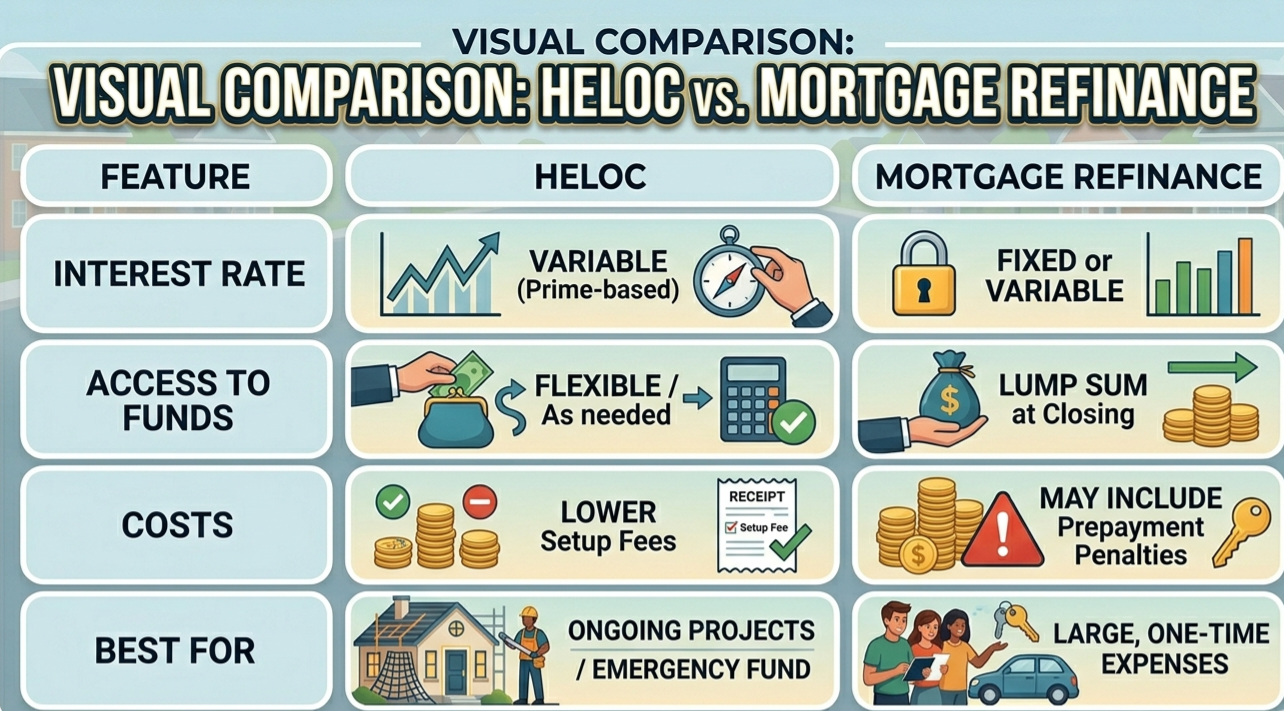
3️⃣ Reverse Mortgage vs. HELOC
The Ontario Reality Check

Banks love pushing HELOCs — but they’re not always designed for retirees.

Reverse Mortgage (55+)

• $0 required monthly payments
• Qualifies on age + home equity
• Tax-free access
• Guaranteed for life

HELOC

• Mandatory interest payments
• Requires income + credit qualification
• Can be frozen or called by the bank

For retirees on fixed income, flexibility matters.

4️⃣ The “No-Fear” Ownership & Repayment Myth

Let’s clear up the two biggest concerns I hear in the GTA:

❌ “The bank takes the house.
False.

In Ontario:
• You stay on title
• You remain the homeowner
• You stay in full control

❌ “My kids will be stuck with the debt.
Also false.

Here’s how repayment actually works:

• No repayment is required while you live in the home
• The loan is only repaid when the home is sold (or the last homeowner permanently leaves)
• Your children are never personally responsible for the debt
• If your heirs want to keep the home, they can repay the balance and keep the property
• If the home is sold, the loan is paid off from the sale proceeds — nothing transfers to your kids

Plus, reverse mortgages in Canada come with non-recourse protection: Even if the loan balance ever exceeds the home’s value, neither you nor your estate owes the difference.

Your only ongoing responsibilities:
✔ Pay property taxes
✔ Maintain home insurance
✔ Keep the property in good repair

Meet those, and you can stay in your home for life.

Your Home. Your Future. Your Terms.

Your home has taken care of you for years.
Now it’s time to let it work for you. A reverse mortgage isn’t a last resort — it’s a Financial Freedom Plan.

✔ Less stress around tax season
✔ No clawback surprises
✔ Tax-free cash, on your timeline
✔ Stay rooted in the GTA community you love

Is Your Home Ready to Work for You This Tax Season?

I specialize in helping Ontario homeowners 55+ use home equity strategically with clear, tax-smart advice and local GTA expertise. If this sounds like something you want to explore, let’s talk.

From Loan to Home — Your Trusted Path to Ownership. 🏡

Read

FHSA vs. RRSP vs. Home Buyers’ Plan: The Ultimate 2026 Guide for Canadian Home Buyers

Buying real estate in Canada in 2026 takes more than a solid income — it takes a clear financial strategy.

Whether you’re a true first-time buyer, a previous homeowner planning a reset, or a family preparing for a move, the government has put three powerful tools on the table: the First Home Savings Account (FHSA), the Registered Retirement Savings Plan (RRSP), and the Home Buyers’ Plan (HBP).

The real question isn’t which one exists — it’s how you use them together to strengthen your down payment and your mortgage position.

Let’s break it down.

1. The FHSA: The “Gold Standard” for Buyers

The First Home Savings Account (FHSA) is widely considered the most powerful savings tool ever introduced for Canadian home buyers.

It combines:

• The tax deduction benefits of an RRSP
• The tax-free growth and withdrawal benefits of a TFSA

How it works
You can contribute $8,000 per year, up to a $40,000 lifetime limit.

The benefit
Every dollar you contribute reduces your taxable income — often creating a meaningful tax refund. When you’re ready to buy, you can withdraw the entire balance, including investment growth, tax-free. There is no repayment requirement.

Strategic move most buyers miss
Even if you can’t contribute yet, open the FHSA now. Contribution room only starts accumulating once the account exists. Waiting costs you future room — permanently.


 2. The RRSP & Home Buyers’ Plan (HBP): Leveraging Retirement Savings

The Home Buyers’ Plan (HBP) isn’t a separate account. It’s a special provision that allows you to temporarily access funds from your RRSP to buy a home.

As of 2024/2025, the withdrawal limit increased to $60,000 per person.

How You’re “Borrowing” from Your RRSP

Although it’s your money, an RRSP is tax-sheltered. You receive a tax deduction today with the understanding that withdrawals are taxed in retirement.

The HBP allows you to withdraw RRSP funds tax-free today for a down payment, as long as you repay them over time. Think of it as an interest-free loan from your future self, designed to help you get into the market sooner.

The Process

Contribute & Wait
Funds must be in your RRSP for at least 90 days before withdrawal.

Request the Withdrawal
Complete CRA Form T1036 (Home Buyers’ Plan Request to Withdraw Funds from an RRSP).

Receive the Funds
Your financial institution releases the funds (up to $60,000) with no withholding tax.


Repayment Rules

• You have 15 years to repay the amount withdrawn
• Repayments usually start in the second calendar year after withdrawal (Example: Withdraw in 2026 → first repayment due in 2028)
• Special rule: Withdrawals between 2022–2025 benefit from a 5-year grace period

Each year, you must repay at least 1/15th of the total withdrawal. You make a regular RRSP contribution and designate it as an HBP repayment on your tax return.

If you don’t repay
Any missed repayment is added to your taxable income for that year, and that RRSP room is permanently lost.


Who Qualifies for the HBP?

First-Time Buyers
Anyone who hasn’t lived in a principal residence owned by them or their spouse/common-law partner in the last four calendar years.

Previous Owners / Planning a Reset
You don’t have to be a lifetime first-time buyer. If you sold, rented for four full calendar years, and then buy again, you may requalify under the HBP rules. Additional exceptions apply for disability or relationship breakdowns.


 Real Estate & Mortgage Strategy: Why This Matters

For the First-Time Buyer

The real goal isn’t just buying — it’s getting to 20% down.

Why?
Because it eliminates mortgage default insurance, which can add tens of thousands of dollars to your mortgage balance.

The strongest strategy
Maximize the FHSA first ($8,000 per year), then use the RRSP through the HBP to close the remaining gap. When stacked properly, a couple can realistically put $200,000+ down using tax-advantaged accounts alone.


For the Homeowner Planning to Move

If you currently own and live in your principal residence, you generally won’t qualify for FHSA or HBP on your next purchase.
That said, RRSP contributions are still extremely valuable. They can be used to offset:

• Higher-income years
• Capital gains
• Transaction-heavy moving years

This frees up more after-tax cash for your next down payment or mortgage strategy.


Mortgage Qualification Power

Lenders pay close attention to your Debt-to-Income (DTI) ratio.

FHSA impact
FHSA withdrawals are considered “clean” funds — no repayment, no future liability.
HBP impact
While HBP withdrawals require repayment, lenders typically view them positively. They demonstrate disciplined saving and don’t affect your file the way consumer debt does. A larger down payment — even if sourced from HBP funds — can improve rates and lending terms.


The “Tax Refund” Strategy Buyers Overlook

Here’s a move smart buyers use to accelerate progress:
• Contribute to your FHSA (up to $8,000/year)
• Contribute to your RRSP using available room

Those contributions generate a tax refund — which can then be used to cover:
• Land transfer tax
• Legal fees
• Inspections
• Other closing costs

You’re effectively letting the tax system help fund your purchase.


Final Verdict: Which Should You Choose?

Don’t choose — stack them strategically.

Priority 1: Maximize the FHSA for its unmatched tax-free, no-repayment benefit
Priority 2: Use the RRSP through the HBP to bridge any remaining down payment gap
Priority 3: Apply tax refunds toward closing costs to reduce out-of-pocket expenses

This is how Canadian buyers win in 2026 — not by stretching themselves thin, but by structuring smarter.

From Loan to Home — Your Trusted Path to Ownership. 🏡

Read

Buying Pre-Construction in Ontario? 🚨 The New April 1st Tarion Rule You Cannot Ignore

If you’re thinking about buying a new freehold home in Ontario this spring, listen up.

Starting April 1, 2026, there’s a major Tarion change that affects your deposit protection — and it all comes down to whether you act within 45 days of signing.

This isn’t small print.

This is six-figure protection.

What Is the New 45-Day Tarion Registration Rule?

For any Agreement of Purchase and Sale (APS) signed on or after April 1, 2026:

You must notify Tarion within 45 days of signing.

If you register on time → you qualify for maximum deposit coverage.

If you miss that 45-day window → your deposit protection may fall into a shared secondary fund… which means more risk if your builder runs into financial trouble.

Translation?

Timing = protection.

💰 How Much of Your Deposit Is Actually Protected?

In today’s GTA market, deposits can easily hit six figures. Here’s how protection works if you register on time:

Note: If you register after the 45-day window, you may only be eligible for coverage under a separate $10 million annual "special fund" which is shared among all late-registrants in Ontario—a much riskier position.

Why Did This Rule Change?

The province introduced this change to crack down on illegal building and “ghost developments.”

When you register your Home ID through Tarion, it immediately verifies that your builder is licensed and authorized to sell.

This protects buyers from:

• Unlicensed builders
• Deposits taken on projects that don’t exist
• Developers disappearing with funds

It adds a layer of accountability — but only if you register.

🏡 Your 2026 Pre-Construction Checklist

If you're buying pre-con in the GTA (or anywhere in Ontario), here’s what you do:

✔ Locate the Home ID
Your builder must provide a Warranty Information Sheet with a 10-digit Home ID at signing.

✔ Mark Your Calendar
You have exactly 45 days from the date you sign your APS.

✔ Register Online
Use Tarion’s MyHome portal to link the Home ID to your name.
It’s free.
It takes less than five minutes.

The Bottom Line

In a market where deposits can reach $80,000, $100,000, or more — this is not paperwork you “get to later.”

This five-minute step protects your money if:

• The builder defaults
• The project isn’t completed
• There’s financial failure

And here’s my advice?

👉 Don’t assume your lawyer is doing this. The 45-day clock starts the moment you sign the APS.

If you’re buying pre-con anywhere in the GTA or Ontario, this is part of your strategy — not an afterthought.

If you want to understand how this fits into your financing, deposit structure, or builder review process, let’s talk. 🏡

From Loan to Home — Your Trusted Path to Ownership. 🏡
Read
This website may only be used by consumers that have a bona fide interest in the purchase, sale, or lease of real estate of the type being offered via the website. The data relating to real estate on this website comes in part from the MLS® Reciprocity program of the PropTx MLS®. The data is deemed reliable but is not guaranteed to be accurate.