RSS

GTA Real Estate Market Trend: The Spring Market Is Starting to Shift

​If you've been keeping an eye on the GTA real estate market and wondering whether now is the right time to make a move, the latest May 2026 data from the Toronto Regional Real Estate Board (TRREB) points to a market that is beginning to tighten.

​Over the past year, lower borrowing costs, improved affordability, and softer home prices encouraged many buyers to stay on the sidelines. Now, we're starting to see those buyers return to the market and absorb available inventory.

​The result? Buyer opportunities still exist, but the window for maximum negotiating power may not stay open for much longer.

​What Happened in May 2026?

​The biggest story continues to be supply and demand. Home sales increased while the number of new listings coming to market declined significantly.

*Note: If you are tracking historical market charts, TRREB recently updated its historic data to integrate new client boards across the Greater Golden Horseshoe, so you may notice slight adjustments compared to older, static reports.

​Looking at the month-to-month trend, the shift becomes even clearer. Seasonally adjusted home sales increased by 10% compared to April, while new listings declined by 2.1%.

​In simple terms, more buyers are entering the market while fewer homes are becoming available.

​Are Home Prices Starting to Rise Again?

​On paper, home prices remain below where they were a year ago. The average GTA home price in May was $1,069,700, down 4.6% year-over-year. The MLS® Home Price Index benchmark was also down 6.7%.

​However, year-over-year numbers only tell part of the story.

​When we look at month-over-month trends, average selling prices have already started to move upward compared to April. That's often one of the first signs that market conditions are shifting.

​If sales continue to outpace new listings through the second half of the year, we could see prices stabilize sooner rather than later, setting the stage for more consistent growth moving forward.

​What Does This Mean for Buyers?

​Buyers still have opportunities, but conditions are gradually becoming more competitive.

​Lower borrowing costs have improved affordability compared to last year, and there are still homes available that offer good value. However, with inventory shrinking, buyers may find themselves facing more competition and fewer opportunities to negotiate aggressively as the year progresses.

​Having your financing in place and being ready to act when the right property comes along will be more important than ever.

​What Does This Mean for Sellers?

​For homeowners considering a move, the current market offers some encouraging signs.

​With new listings down nearly 19% compared to last year, there is less competition for buyers' attention. Well-priced homes in desirable neighbourhoods are often attracting strong interest, particularly when they are presented and marketed effectively.

​While we're not back to the frenzied conditions of previous years, sellers are beginning to benefit from improving market dynamics.

​The Bottom Line

​The GTA housing market appears to be moving away from the more balanced conditions we've experienced over the past year.

​While buyers still have opportunities, inventory is tightening and market momentum is gradually shifting. As always, real estate is highly local, and what's happening across the GTA may look very different depending on your neighbourhood, property type, and price point.

​If you're curious about what these trends mean for your plans, or would like a no-pressure conversation about your home's value or current opportunities in the market, I'd be happy to help you navigate the numbers and create a strategy that works for you.

From Loan to Home — Your Trusted Path to Ownership. 🏡

Read

New 30-Year Amortization & $1.5M Insured Mortgage Rules: What GTA Buyers Need to Know in 2026

​If you’ve been following the GTA real estate market lately, you’ve probably heard a lot about the recent federal mortgage rule changes. The headlines make it sound exciting: more flexibility, easier access to financing, and more options for buyers across Canada. And for many buyers in Ontario—especially first-time homebuyers in the GTA—these updates genuinely can create more opportunities.

​But mortgage rules are only helpful when you understand how they actually affect your budget, monthly payments, and long-term financial goals. That’s where I think the real conversation matters.

The Reality Check: Buying a home—whether it’s a condo in Mississauga, a townhouse in Milton, or a detached home in Brampton—isn’t about chasing headlines or reacting to market pressure. It’s about understanding your numbers, knowing your options, and making the right move for your family when the timing makes sense for you.

Here’s a practical breakdown of what these new mortgage changes actually mean in Ontario.

​1. The $1.5 Million High-Ratio Insured Mortgage Rule

​One of the biggest updates is the expansion of the high-ratio insured mortgage cap to homes priced up to $1.5 million. For buyers in the GTA, that matters.

​Historically, once a property hit the $1 million mark, buyers needed a minimum 20% down payment. That meant a $1,000,000 home required a $200,000 minimum down payment upfront. For many families in the GTA, especially move-up buyers or younger buyers trying to enter the market, that upfront requirement became the biggest barrier—not the monthly mortgage payment.

​Under the updated rules, eligible buyers can now purchase homes priced between $1 million and $1.5 million with an insured mortgage and a lower required down payment.

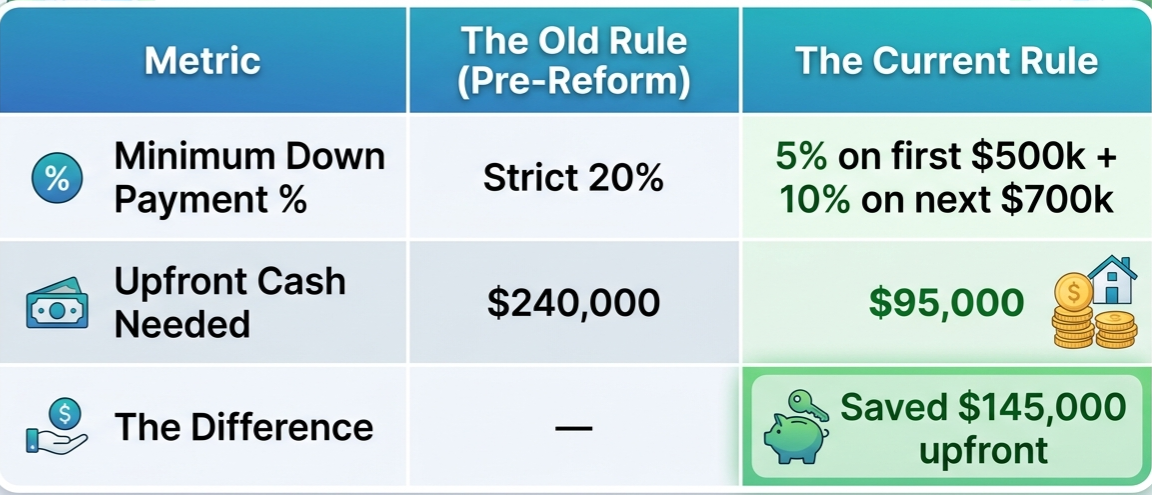
​Example: Down Payment for a $1.2 Million Home in the GTA

​The minimum down payment is now calculated on a tiered structure:

  • ​5% on the first $500,000

  • ​10% on the remaining amount up to $1.5 million

​For a $1.2 million home, the shift looks like this:

That’s a difference of $145,000 less upfront. It can significantly change what’s possible for buyers looking at townhomes or detached homes in communities like Brampton, Vaughan, Oakville, Burlington, or parts of Durham.

The Tradeoff: A lower down payment usually means a larger mortgage balance and mortgage insurance premiums added to your financing. It creates flexibility—but it also increases your total borrowing. That’s why it’s worth looking at the full picture before making a move.

​2. The 30-Year Amortization Canada Change

​The second major update is around the 30-year amortization extension in Canada. Previously, buyers putting less than 20% down on an insured mortgage were generally limited to a 25-year amortization.

​Now, eligible buyers can access a 30-year amortization on insured mortgages if:

  • ​You’re a first-time homebuyer in the GTA or anywhere in Canada, or

  • ​You’re purchasing a newly built construction home

​This matters because spreading payments over a longer timeline lowers the required monthly payment. That can improve affordability and may also help with the Canadian mortgage stress test, since lower monthly obligations can support debt ratio calculations.

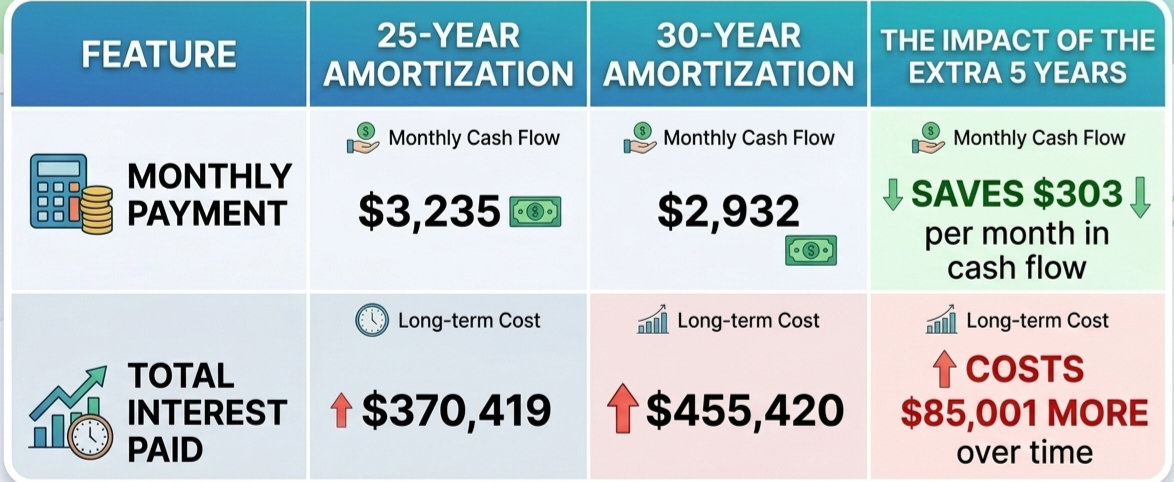
​25-Year vs. 30-Year Mortgage Comparison

(Based on a $600,000 mortgage balance at a hypothetical 4.25% interest rate)

So yes—cash flow improves. But you’re also paying more over time. That’s why this isn’t automatically “better.” It simply gives you another strategy depending on your goals.

​Where This Can Help GTA Buyers Most

​For many buyers in Ontario right now, inventory remains elevated in several markets and negotiation opportunities are still available. That means these mortgage rule changes can be especially helpful for:

  • ​Buyers moving from a condo to a townhouse

  • ​Families looking for detached homes in the suburbs

  • ​Buyers who have strong household income but haven’t saved a full 20% down payment yet

  • ​First-time buyers trying to qualify comfortably while keeping monthly payments manageable

  • ​Buyers purchasing pre-construction or brand-new inventory

​Used carefully, these rules can create more flexibility. And flexibility can be incredibly valuable in a shifting market.

​A Practical Strategy Many Buyers Overlook

​One thing I often remind buyers: a 30-year amortization doesn’t mean you’re locked into paying for 30 years. Most lenders still allow prepayment privileges.

​That means you can:

  • ​Keep the lower required payment now to protect your monthly cash flow.

  • ​Increase your monthly payments or make lump-sum contributions later when your budget allows.

​This approach gives you the safety net of lower mandatory payments today without giving up the ability to pay the mortgage down faster when household income improves. For a lot of families, that balance matters.

​Final Thoughts

​The new $1.5M insured mortgage rules and 30-year amortization Canada changes are meaningful. For some buyers, they may create an opportunity to buy sooner. For others, waiting and continuing to build savings may still be the better move. Neither option is automatically right.

​The goal isn’t to rush. The goal is clarity.

​Understand your budget. Understand the tradeoffs. Understand what ownership looks like beyond the purchase price. And then make your move based on your long-term plan—not market pressure.

​Because the best home purchase decisions in the GTA usually happen when strategy leads first.

From Loan to Home — Your Trusted Path to Ownership. 🏡

Read

Global Uncertainty & The Ontario Housing Market: What Does It Actually Mean for You?

​If you’ve been following the news lately, you’ve probably noticed that global uncertainty seems to be everywhere.

​Ongoing conflicts overseas, rising energy concerns, supply chain disruptions, and persistent inflation pressures continue to dominate headlines. While these events may feel far removed from daily life in Ontario, they have a direct impact on something much closer to home: interest rates, borrowing costs, and housing affordability.

​Many Canadians entered 2026 expecting a series of continuous Bank of Canada rate cuts. Instead, the Bank has maintained its policy rate at 2.25%, with markets watching closely ahead of the next rate announcement on June 10, 2026.

​So what does all of this mean if you’re planning to buy, sell, rent, or invest in Ontario real estate?

​Let’s break it down.

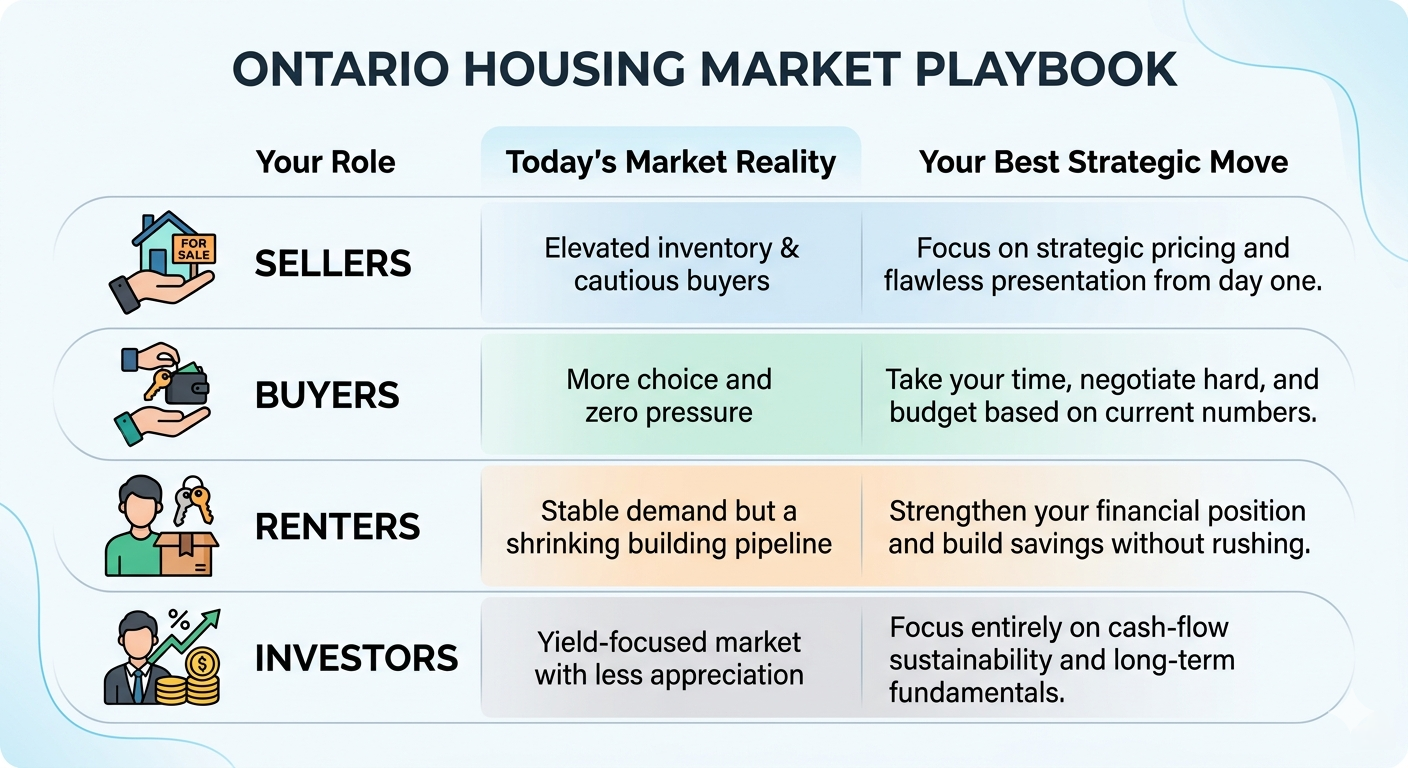
​Sellers: The Market Rewards Strategy, Not Wishful Thinking

​If you’re thinking about listing your home this year, understanding today’s market conditions is critical.

​Inventory levels across many Ontario markets remain elevated, giving buyers more choice than they’ve had in years. While sales activity has improved compared to the slower winter months, prices in many areas remain relatively flat compared to last year.

​What does that mean? Buyers are taking their time.

​They’re comparing properties, negotiating harder, and in many cases, including conditions that would have been almost impossible during the pandemic frenzy. For sellers, this doesn’t mean your home won’t sell. It means proper pricing, strong marketing, and excellent presentation matter more than ever.

A Quick Reality Check: One of the biggest mistakes a homeowner can make right now is waiting for a sudden spike in prices that may or may not come. If you’re selling and buying within the same market, remember that softer pricing affects both sides of the transaction. The key isn't trying to perfectly time the market—it's understanding the market you are in.

​Buyers: More Choice, More Leverage, Less Pressure

​For buyers, today’s environment offers something that has been missing for several years: breathing room. The fear of being priced out overnight has largely disappeared.

​Yes, borrowing costs remain higher than many buyers would like. Fixed mortgage rates continue to sit in the mid-to-high 4% range because global energy conflicts keep long-term bond yields sticky, while variable-rate borrowers are waiting to see what the Bank of Canada does next.

​But there is a massive silver lining to this equation:

  • Stronger Negotiating Power: More inventory means you can finally take the time to review status certificates, complete thorough home inspections, and compare properties.

  • Flexible Terms: You can comfortably negotiate terms and protective conditions that would have been rejected immediately just a few years ago.

The Strategy: Don’t make life-changing decisions based on where you think rates might go. Make decisions based on where your finances are today. If your budget works comfortably at current rates, you can move forward with confidence regardless of what happens next.

​Renters: The Affordability Challenge Isn't Going Away

​Many renters have been waiting for ownership to become significantly more affordable before making a move. Unfortunately, the macro math remains challenging.

​While some recently completed projects have added rental supply in the short term, developers continue to slow new construction activity across Ontario. High commercial financing costs and weaker pre-construction sales have caused many multi-family developments to be delayed or cancelled altogether, pushing housing starts down significantly.

​That creates an important dynamic: The current rental market has stabilized somewhat, but the future pipeline of housing is shrinking. If fewer homes are built today, it can create supply shortages tomorrow.

The Strategy: For renters who are saving toward homeownership, this is a prime opportunity to focus on strengthening your savings, reducing debt, and improving your mortgage qualification profile rather than rushing into a purchase that stretches your household budget too thin.

​Investors: Cash Flow Matters Again

​The Ontario investment landscape has changed dramatically. For years, many investors relied heavily on rapid appreciation to generate returns, using rising home values to mask weak or even negative cash flow.

​Today’s environment is entirely different. Higher borrowing costs mean that negative cash-flow properties are becoming increasingly difficult to justify, particularly in segments—like the GTA condominium market—where current resale supply remains elevated.

​As a result, smart money is shifting away from speculation and moving toward properties that generate stable, predictable income from day one. The question is no longer: "How much could this property appreciate in two years?"

​The question is: "Does this investment make sense if interest rates stay exactly where they are today?"

​This mindset shift is creating unique opportunities to acquire quality assets at a discount from motivated sellers, provided you focus on fundamentals over guesswork.

​The Bottom Line

​Global events are actively influencing inflation expectations, bond yields, and central bank interest rate decisions. Those factors ultimately filter directly into Ontario’s housing market. But real estate decisions should never be based solely on global headlines.

Nobody knows exactly where rates, prices, or global events will go next. What we do know is that informed decisions consistently outperform emotional ones.

​Whether you’re buying your first home, planning a move, renewing your mortgage, or expanding your investment portfolio, the best strategy is the one built around your unique household goals—not market predictions.

From Loan to Home — Your Trusted Path to Ownership. 🏡
Read

Demystifying Mortgage Default Insurance in Ontario: CMHC, Sagen & Canada Guaranty (2026 Guide)

​Buying a home in Ontario comes with plenty of new terminology—and one of the most misunderstood is mortgage default insurance, often casually called CMHC insurance.

​Many buyers assume this insurance protects them if they miss mortgage payments. In reality, it protects the lender—but understanding how it works can directly impact your mortgage approval, your interest rate, and how much home you can comfortably buy.

​Here’s a straightforward breakdown of how mortgage default insurance works in Ontario.

​What Is Mortgage Default Insurance?

​In Canada, if you purchase a residential property with less than a 20% down payment, mortgage default insurance is generally required. This is called a high-ratio mortgage.

​Because a smaller down payment creates more risk for the lender, the insurer guarantees the mortgage in the event of default. The practical benefit for buyers is that insured mortgages often qualify for lower interest rates than uninsured mortgages.

​That can make a meaningful difference in affordability—especially when navigating the Greater Toronto Area housing market.

​CMHC vs. Sagen vs. Canada Guaranty: What’s the Difference?

​Many buyers use “CMHC insurance” as a catch-all term, but Canada actually has three mortgage default insurance providers. Your mortgage professional will help determine which provider fits your specific financial file best:

​1. Canada Mortgage and Housing Corporation (CMHC)

​Canada’s federal Crown corporation and the most recognized mortgage insurer in the country.

​2. Sagen

​Formerly Genworth Canada, Sagen is Canada’s largest private mortgage default insurer.

​3. Canada Guaranty

​A major, privately owned Canadian mortgage insurer that offers robust alternative programs for diverse buyer profiles.

​While their core premium rates are identical, their underwriting flexibility can differ depending on income type, down payment structure, and unique property details.

Important Distinction: Mortgage default insurance is entirely different from mortgage life or disability insurance. It protects the lender—not the borrower.

​Who Needs Mortgage Default Insurance in Ontario?

​Mortgage default insurance typically applies when your down payment is between 5% and 19.99%. To qualify, insured mortgages must meet strict federal guidelines:

​Maximum Purchase Price

​Homes purchased for under $1.5 million may qualify for insured financing. Properties at $1.5 million or more automatically require a conventional mortgage with a minimum 20% down payment.

​Down Payment Tiers

​The minimum down payment in Canada is calculated progressively based on the purchase price:

  • 5% on the first $500,000

  • 10% on the portion between $500,000 and $1,499,999

Example Calculation: On a purchase price of $900,000:

  • ​First $500,000 = $25,000

  • ​Remaining $400,000 = $40,000

  • Minimum required down payment = $65,000

​Amortization Rules

​The standard maximum amortization for insured mortgages is 25 years. However, a 30-year amortization is available to help lower monthly payments under two specific exceptions:

  1. ​You are an eligible first-time homebuyer.

  2. ​You are purchasing an eligible newly built home.

​Occupancy Rules

​The home must be located in Canada and intended as an owner-occupied property (or occupied by an immediate family member on a rent-free basis).

​How Much Does Mortgage Default Insurance Cost?

​Insurance premiums are calculated as a percentage of your total loan amount and are based entirely on your Loan-to-Value (LTV) ratio

Note: If you qualify for and choose a 30-year amortization, a small premium surcharge of 0.20% is added to the standard rates above.

Example Scenario:

​Purchase price: $700,000

​Down payment: 10% ($70,000)

​Mortgage amount before insurance: $630,000

​Estimated premium at 3.10% = $19,530

​This premium is added directly to your principal mortgage balance, meaning you pay it down gradually over time rather than upfront.

Ontario Closing Cost Detail: PST on the Insurance Premium

​A detail many Ontario buyers miss during their budgeting phase: while the premium itself is rolled into the mortgage, Ontario’s 8% Provincial Sales Tax (PST) applies to the premium and must be paid in cash at closing.

​Using the example above:

  • ​Premium = $19,530

  • Ontario PST due on closing = $1,562.40

​This amount needs to be budgeted explicitly as part of your out-of-pocket closing costs.

​Step-by-Step: How Do You Qualify for CMHC, Sagen, or Canada Guaranty?

​Insurers look beyond just your annual income—they assess the overall strength and stability of your financial file:

Ontario Buyers: Why This Matters

​Mortgage default insurance can feel like an extra expense—but for many buyers, it acts as a valuable tool that unlocks:

  • ​Lower down payment requirements, keeping more cash in your reserves.

  • ​Stronger, highly competitive mortgage interest rates.

  • ​An earlier entry point into the Ontario real estate market.

​For buyers across the Greater Toronto Area—including Brampton, Mississauga, Milton, and Whitby—understanding these guidelines before you start shopping can save substantial stress and help you build a clear, bulletproof budget.

​Whether you’re buying your first home, moving up to a larger property, or comparing insured vs. conventional financing, understanding mortgage default insurance early helps you make better decisions—and avoid surprises on closing day.

From Loan to Home — Your Trusted Path to Ownership. 🏡

Read
This website may only be used by consumers that have a bona fide interest in the purchase, sale, or lease of real estate of the type being offered via the website. The data relating to real estate on this website comes in part from the MLS® Reciprocity program of the PropTx MLS®. The data is deemed reliable but is not guaranteed to be accurate.