

Dreaming of a peaceful waterfront retreat? Buying or selling a recreational property in Ontario is an exciting milestone, but it is vastly different from a standard residential transaction. From navigating complex zoning and shoreline ownership to understanding the strict nuances of "Type A" versus "Type B" cottage mortgages, you need a clear strategy to protect your investment.
As both your Real Estate Sales Representative and Mortgage Agent, I’ve synthesized the essential steps you need to take to ensure your purchase or sale is a success.
1. Buying a Cottage: The Essential Due Diligence Checklist
When searching for the perfect cottage, it’s easy to focus on the view. However, seasoned buyers know that infrastructure is what keeps the investment safe. Before you sign an offer, ensure your agent has verified these four critical areas:
🚗 Year-Round vs. Seasonal Access
Don’t assume your cottage is accessible 12 months a year. Check if the road is municipally maintained or privately maintained. If the road is seasonal, it won’t be plowed in winter, which impacts emergency service access, insurance eligibility, and your ability to secure a traditional mortgage.
🚽 The Septic System Reality Check
A failing septic system can be a $25,000–$60,000 surprise. Ontario regulations require specific setbacks from the water. If the current system doesn’t meet modern environmental standards, you may face massive replacement costs. Always make your offer conditional on an independent, professional septic inspection.
💧 Water Source and Quality
Does the property use a drilled well, a dug well, or a lake-water intake system? If the water is sourced from the lake, you must ensure a proper filtration and UV purification system is installed. Always test for bacteria and mineral content before closing.
🌊 Shoreline Road Allowances
In many Ontario municipalities, the 66-foot strip of land between your property line and the water is an un-bought "Shoreline Road Allowance" owned by the municipality. If the previous owner never purchased it, you could face privacy issues or restrictions on building docks. Verify this status through a current property survey.
2. Selling a Waterfront Property: How to Maximize Value
If you are selling, preparation is your best marketing tool. Buyers are doing more research than ever, and they will look for red flags immediately.
Prepare Your Documentation: Have your septic pump-out receipts, well water tests, and recent surveys ready to go.
Be Transparent About "Grandfathered" Structures: If you have an older boathouse or dock, be clear about its status. While it may be "legally non-conforming," local Conservation Authorities may have strict rules about rebuilding or modifying them.
Calculate Your Capital Gains: If the cottage is not your principal residence, it is subject to Capital Gains Tax. Consult with your accountant to understand how your historical capital improvements can help reduce your tax burden.
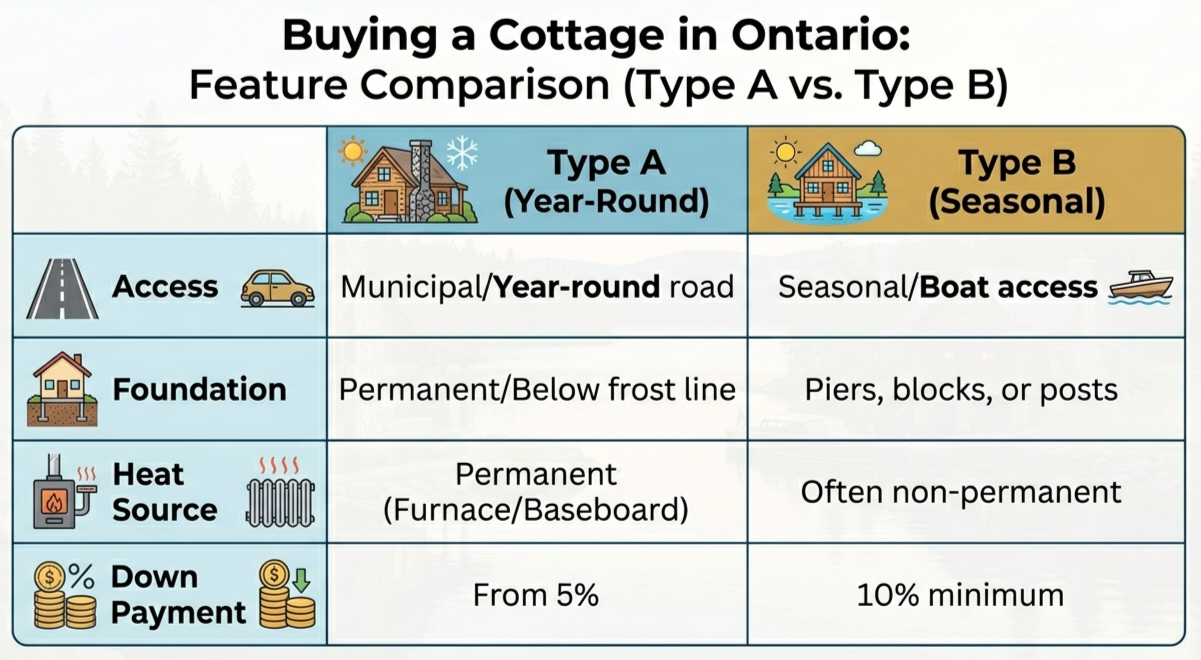
3. Cottage Financing: Type A vs. Type B Mortgages
Lenders view recreational properties very differently than primary homes. Before you start your search, know which category your target property falls into:
💡 Pro Tip: Leverage Your Urban Equity
If the cottage you’ve set your heart on is a "Type B" seasonal property, traditional financing can be restrictive. Many of my clients choose to use a Home Equity Line of Credit (HELOC) or a cash-out refinance on their primary home in the city. By leveraging your existing equity, you can purchase the cottage as a "cash buyer," giving you significantly more negotiating power and bypassing the stricter lender criteria for recreational properties.
Ready to Make Your Move?
Navigating the cottage market requires a balance of passion for the lifestyle and a sharp eye for the numbers. As your dually licensed partner in real estate and mortgages, I evaluate the property’s mortgageability and market value simultaneously to ensure your interests are protected.
Contact me today to discuss your goals for buying or selling in Ontario!
Disclaimer: This blog is for informational purposes only and does not constitute financial or legal advice. Always consult with a qualified accountant or lawyer regarding your specific tax and legal situation.
From Loan to Home — Your Trusted Path to Ownership. 🏡