RSS

Why Fixed Mortgage Rates Are Rising in Canada | March 2026 Mortgage Market Update

If you’re approaching a mortgage renewal in 2026, you’re not alone.

Nearly one-third of Canadian mortgages are set to renew this year, and many homeowners across the Greater Toronto Area are noticing something unexpected: fixed mortgage rates are creeping higher—even though the Bank of Canada hasn’t raised its policy rate.

So what’s actually driving this shift?

As we approach the March 18, 2026 Bank of Canada announcement, here’s what GTA homeowners and buyers need to understand about fixed mortgage rates, bond yields, and borrowing power in today’s market.


1. Fixed Mortgage Rates Follow Bond Yields — Not the Bank of Canada

One of the biggest misconceptions in the mortgage world is that the Bank of Canada directly sets fixed mortgage rates.

It doesn’t.

Fixed mortgage rates are primarily driven by Government of Canada 5-year bond yields.

In the past few weeks, global geopolitical tensions—particularly involving Iran—have pushed oil prices higher, creating volatility in financial markets. Investors have responded by adjusting their expectations around inflation and economic stability.

The result?

Canada’s 5-year bond yield has climbed from roughly 2.6% to above 3.0% in just a few weeks.

And when bond yields rise, lenders typically raise fixed mortgage rates almost immediately to protect their margins.


2. Canada’s 2026 Mortgage Renewal Cliff

Another major factor putting pressure on the mortgage market is what economists are calling Canada’s “renewal cliff.”

Millions of homeowners who locked in ultra-low fixed rates during 2020–2021 are now approaching renewal.

Many of those mortgages were secured at 1.5%–2% rates.

Today’s rates are significantly higher.

For some homeowners in the Greater Toronto Area, this could mean monthly payment increases of 15% to 20% when their mortgage renews.

Because lenders know a massive wave of renewals is coming, many are becoming less aggressive with promotional fixed-rate pricing, waiting to see how the market evolves.


3. Trade Uncertainty Is Keeping Inflation “Sticky”

Another layer affecting the mortgage market is international trade uncertainty.

The upcoming CUSMA review between Canada, the United States, and Mexico is creating concern around potential tariffs and economic disruption.

When global trade uncertainty rises, inflation tends to stay stubbornly high.

That puts the Bank of Canada in a difficult position.

While many economists expected multiple rate cuts in 2026, the central bank may choose to hold the overnight rate around 2.25% longer than anticipated to protect the Canadian dollar and keep inflation under control.

And when inflation expectations remain elevated, bond yields—and fixed mortgage rates—tend to rise as well.


What This Means for GTA Homeowners and Buyers

Despite ongoing uncertainty, the Spring 2026 real estate market in the Greater Toronto Area is opening a rare strategic window.

Across the GTA, inventory is beginning to tighten while many buyers remain on the sidelines waiting for clearer direction on mortgage rates. This hesitation on both sides is creating a temporary stalemate in the market—one that is quietly shifting negotiating power back toward buyers.

For homeowners approaching a mortgage renewal in the GTA, this is also a key moment to reassess financing strategies, explore equity opportunities, and position themselves ahead of the next shift in Toronto’s housing market.

The bottom line: this pause between buyers and sellers is creating more negotiating leverage than the GTA market has offered in years.


If Your Mortgage Is Renewing in 2026

Do not wait until the last minute.

Most lenders allow rate holds up to 120 days before renewal, which means you can secure a rate today while still keeping your options open.

With bond yields moving quickly, waiting until the 30-day mark could expose you to higher fixed rates.

Starting early gives you time to:

• Compare lenders

• Explore refinancing opportunities

• Lock in protection against further bond volatility


If You’re Buying a Home in 2026

One interesting shift in today’s mortgage market is that variable rates are once again undercutting fixed rates.

Historically, that’s been the norm—but it disappeared during the rate-hike cycle of 2022–2023.

For some buyers, a variable or adjustable mortgage may provide more flexibility as the rate cycle evolves.

The key is running the numbers based on your risk tolerance, timeline, and financial goals.


Final Thoughts

The biggest takeaway from the March 2026 mortgage market is this:

Mortgage rates don’t move in isolation.

They respond to global geopolitics, bond markets, inflation expectations, and economic policy.

If you’re renewing or buying this year, understanding these moving pieces can help you protect your borrowing power and make smarter decisions in a changing market.

✅ Mortgage Renewal in 2026?

Start planning early. The right strategy today could save you thousands over the life of your mortgage.

From Loan to Home — Your Trusted Path to Ownership. 🏡

Read

The 2026 GTA Spring Market: The “Sidelined Buyer” Standoff

As we move into the second week of March, the GTA real estate market is sitting in a very interesting standoff.

On one side, there are over 100,000 buyers sitting on the sidelines, waiting for what they believe is the “bottom” of the market.

On the other side, we have sellers hesitating to list, which has led to a 17.7% drop in new listings year-over-year as of February 2026.

But here’s the truth most headlines are missing: For strategic homeowners, this quieter market is actually a huge opportunity.

And the next few weeks could set the tone for the entire spring market.


1. The Big Date Everyone Is Watching: March 18, 2026

Right now, every real estate conversation in Ontario circles back to one date: March 18, the next Bank of Canada rate announcement.

The current policy rate sits at 2.25%, and most analysts are expecting the Bank to hold.

But here’s the thing: Markets don’t just react to rate changes — they react to certainty.

A hold signals that the aggressive rate hikes are firmly behind us. And when buyers feel confident that rates are stabilizing, they start moving.

My expectation?

That announcement could act as the starting gun for thousands of sidelined buyers to re-enter the market.

For sellers, timing matters. Listing shortly after that announcement means your home hits the market right when buyer confidence spikes.


2. The 17% Advantage Sellers Aren’t Talking About

Most headlines focus on sales being down. But the real story right now is supply.

According to the Toronto Regional Real Estate Board, new listings dropped 17.7% in February.

That matters. Because fewer listings means less competition.

The average GTA home price is currently sitting around $1,008,968, and well-priced homes that are properly prepared for market are still performing extremely well.

Homes that are staged and marketed to 2026 expectations — warm tones, natural light, lifestyle presentation — are still seeing strong activity, and in some pockets, even multiple offers.

In other words: buyers are cautious, but they are still buying the right homes.


3. Mortgage Readiness Matters More Than Ever

One advantage I bring to my clients is that I see both sides of the transaction.

As someone who is licensed in both mortgages and real estate, I see deals from the inside — and right now, financing is where many transactions succeed or fail.

Even though rates have stabilized, buyers still need to qualify under the Mortgage Stress Test, which means qualifying around 5.25% or higher.

That’s why simply accepting an offer isn’t enough anymore.

In this market, many offers will still include financing conditions, and the last thing any seller wants is a deal falling apart days before closing.

This is why I always focus on verifying buyer readiness — making sure the person making the offer isn’t just interested, but actually capable of closing.


4. The Market Is Splitting: Detached vs. Condos

Another trend we’re seeing across the GTA is a split market.

Detached and semi-detached homes continue to hold strong. Families are still prioritizing space, and these properties remain the most resilient.

Condos, however, are seeing more inventory, which gives buyers a little more negotiating power.

If you’re selling a condo in 2026, marketing matters more than ever. Your listing needs to stand out with strong digital exposure, lifestyle branding, and polished presentation.


The Spring 2026 Sweet Spot

There is a very specific window forming right now.

The period between the March 18 rate announcement and the April/May listing surge could be the sweet spot of the spring market.

You benefit from renewed buyer confidence while avoiding the wave of new listings that typically hit in late spring.

For sellers who position their home correctly, this timing can make a significant difference.


If You're Planning a Move This Year

There are two ways I can help you right now:

1️⃣ GTA Market Snapshot

I can provide a simple breakdown of the Sales-to-New-Listings Ratio for your specific city or neighbourhood so you can see exactly what the market looks like where you live.

2️⃣ Mortgage & Equity Review

If you're thinking about selling and moving up, I can run the numbers to show how your current equity works with today’s mortgage rates.

No pressure — just clarity so you can make the right move when the time is right.

From Loan to Home — Your Trusted Path to Ownership. 🏡

Read

Why 30% of GTA Real Estate Deals Are Failing at Closing — And How to Make Sure Yours Isn’t One of Them

You find the perfect home.
Your offer gets accepted.
Your family starts packing boxes.

Then ten days before closing, you get the call no buyer ever wants:

“Your financing fell through.”

Unfortunately, this situation is becoming far more common in the 2026 GTA real estate market. While the market is stabilizing overall, certain segments—especially condos and pre-construction properties—are seeing failure-to-close rates approaching 30%.

Most buyers are shocked when this happens because they believe they were already approved for the mortgage.

But in many cases, there’s a huge difference between a mortgage pre-approval and a firm mortgage commitment.

The biggest issue?
The person helping you buy the home is usually not the same person responsible for making sure the financing actually works.

That disconnect is where deals begin to fall apart. As someone who is both a Licensed Real Estate Agent and Mortgage Agent, I see this problem all the time. When the real estate strategy and the mortgage strategy aren’t aligned from the beginning, buyers can run into serious issues later in the transaction.

Here are the three biggest reasons deals are failing at closing in today’s market—and how to protect yourself.


1. The Appraisal Gap (The #1 Deal Killer)

As prices adjust in parts of the GTA, some bank appraisals are coming in below the agreed purchase price.

Here’s how it usually plays out.

A buyer agrees to purchase a home for $800,000, but when the lender orders the appraisal, the property is valued at $750,000.

The bank will only finance based on the lower appraised value. That means the buyer suddenly needs to come up with an additional $50,000 in cash to close the deal.

For many buyers, that simply isn’t possible.

Without identifying this risk early, buyers can find themselves scrambling just days before closing—and in some cases, their deposit is at risk.

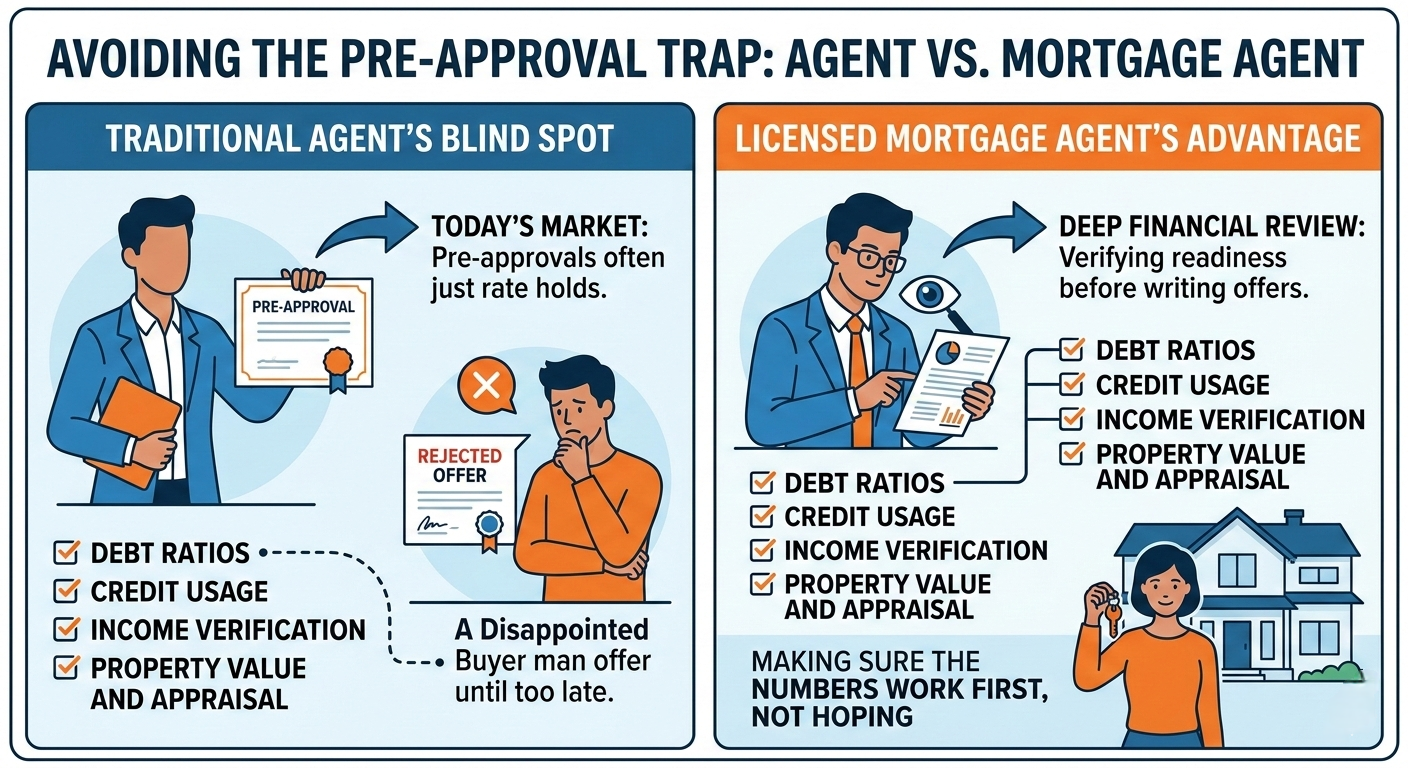
2. The Pre-Approval Trap

Many buyers enter the market with a pre-approval from a bank and assume they’re fully approved.

In reality, many pre-approvals are simply rate holds based on limited information. When the lender eventually reviews the full file, they take a much deeper look at:

• income verification
• debt-to-income ratios
• credit usage
• employment stability
• the property appraisal

This deeper review often happens after the offer has already been accepted. That’s when unexpected problems can appear.

A traditional real estate agent focuses on helping you find the right property and negotiate the purchase. However, they often don’t see the financial details lenders evaluate later in the process.

Because I’m also a mortgage agent, I review the financing side before we even write the offer. I’m looking at your file the same way an underwriter will—so we can identify potential issues early and make sure the numbers actually work.

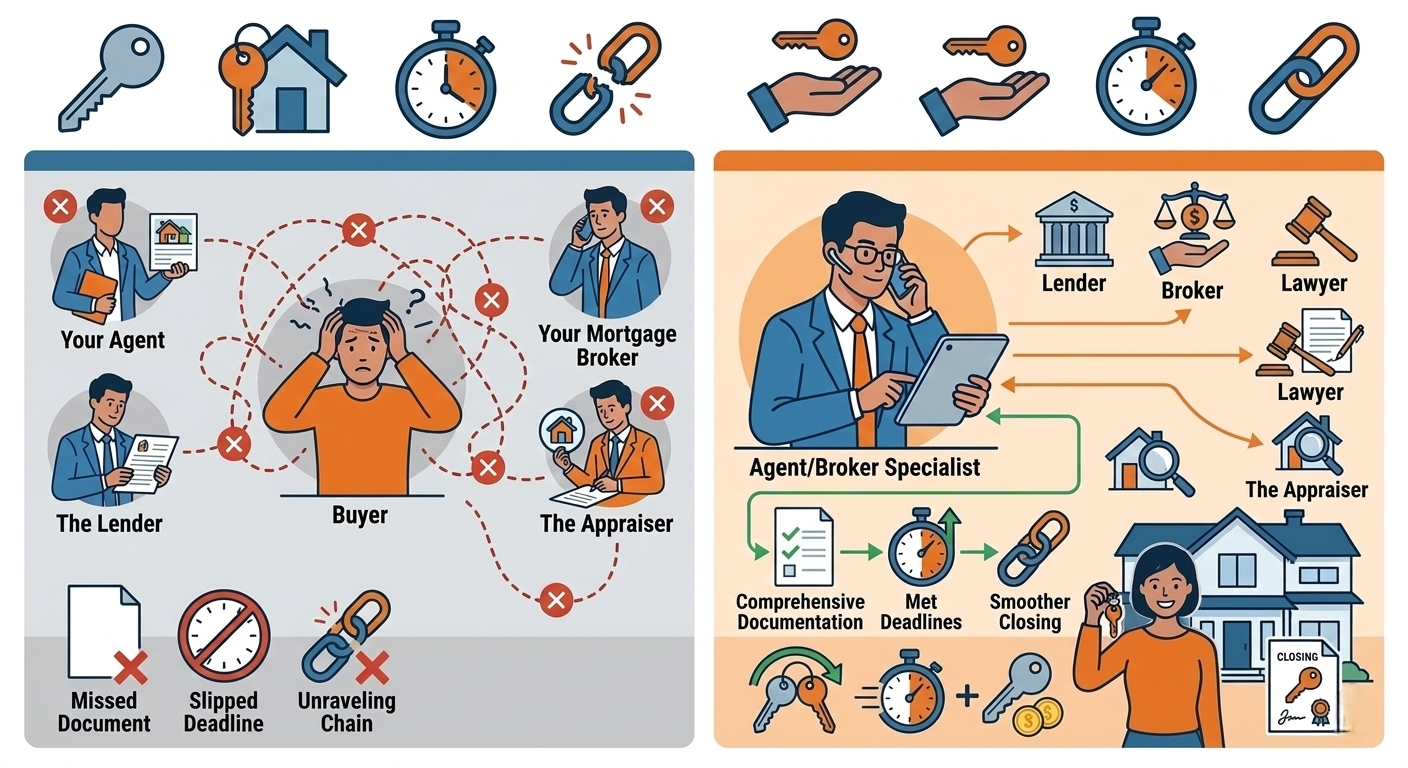
3. The “Game of Telephone”

A typical real estate transaction involves multiple professionals:
• the real estate agent
• the mortgage broker
• the lender
• the lawyer
• the appraiser

When everyone is working on different timelines, communication gaps can happen.

Sometimes deals fall apart simply because of small issues like:
• a missing document
• a delayed appraisal
• a late condo status certificate
• a last-minute lender condition

Suddenly funding is delayed or pulled days before closing.

It’s stressful for buyers and completely avoidable when the process is better coordinated.

How I Help Ensure My Clients Actually Close

As both a Real Estate Sales Representative and Licensed Mortgage Agent, I offer something most buyers don’t get: one coordinated strategy for both the home purchase and the financing.

Here’s what that looks like in practice.

Financial Verification Before We Shop

I don’t just rely on a pre-approval. I review the file to make sure it can actually pass today’s lender guidelines and stress test before we even start looking at homes.

Offers Based on Real Lending Numbers

I guide clients based on what lenders are realistically approving and what properties are likely to appraise for, not just the listing price.

One Coordinated Process

Because I manage both the real estate and mortgage side of the transaction, everything stays aligned from offer to closing.

There are fewer communication gaps, fewer surprises, and a much smoother path to getting the keys.


The 2026 Market Tip Buyers Need to Know

In today’s market, closability matters more than offer price.

Sellers and listing agents are becoming more cautious, and many are prioritizing buyers who can demonstrate strong financing and a solid closing strategy behind their offer.

Having someone who understands both the real estate side and the mortgage side of the transaction can make a major difference.

Because finding the right home is important. But making sure you actually close on it is everything.


Don’t Become a Statistic

The GTA housing market in 2026 leaves very little room for mistakes.

Whether you’re buying a condo, pre-construction property, or detached home, it’s critical to understand both the property side and the financing side of the transaction.

When those two pieces are aligned from the start, the entire process becomes stronger—from the offer you write to the day you pick up the keys.

And at the end of the day, the goal isn’t just getting your offer accepted. It’s making sure you successfully close and walk into your new home with confidence. 

From Loan to Home — Your Trusted Path to Ownership. 🏡
Read

GTA Real Estate Market Update: Why February 2026 Is a Turning Point for Buyers and Sellers

The Greater Toronto Area (GTA) real estate market showed signs of significant tightening in February 2026. While headlines often focus on the dip in total sales, the real story is the shrinking inventory and the massive “pent-up demand” quietly building behind the scenes.

If you’re navigating the Toronto housing market this year, understanding these latest numbers from the Toronto Regional Real Estate Board (TRREB) is essential for making smart moves.


The Numbers: Sales vs. Inventory Crunch

Here’s what February 2026 looked like:

• Home Sales: 3,868 transactions (down 6.3% from February 2025)

• New Listings: 10,705 (down a staggering 17.7% year-over-year)

• Average Selling Price: $1,008,968 (down 7.1% from last year)

• MLS® HPI Composite: down 7.9% year-over-year

The takeaway? New listings are dropping nearly three times faster than sales. This supply shortage means that once prices stabilize, competition is likely to heat up fast.


Why GTA Homeowners Are Holding Back

Ipsos polling shows that many potential sellers are waiting on more economic certainty or positive news on the trade front.

TRREB President Daniel Steinfeld explains: "If new listings continue to trend lower through the spring, competition between homebuyers will increase, supporting home prices and a recovery in sales."

This cautious approach from sellers is creating an interesting market dynamic: fewer homes for sale, but thousands of buyers ready to act.


The 100,000 Buyer Wave

One of the most surprising stats? TRREB Chief Information Officer Jason Mercer estimates over 100,000 buyers are currently on the sidelines, waiting for the right moment.

This “pent-up demand” could drive a surge in sales in the second half of 2026—and likely into 2027.


What This Means for You

For Buyers: This could be a window of opportunity. With the MLS® Home Price Index down month-over-month, there’s a temporary reprieve in pricing. But with inventory dropping fast, the early spring market could close that window quickly.

For Sellers: Less competition is your friend. With new listings down 17.7%, your home stands out. Price it right, and thousands of eager buyers will take notice.


The “Missing Middle” Crisis

TRREB CEO John DiMichele points to a growing need for “missing middle” housing—the gap between high-rise condos and single-family homes. For investors and developers, this segment is where long-term opportunity lies in the GTA.


Bottom Line

The GTA market is in a “wait and see” phase—but the data points to a busy second half of 2026. Whether you’re looking for a condo or a detached home, having a data-driven strategy is the only way to win.

Curious about how these February stats affect your neighbourhood? Reach out—I’d be happy to give you the inside scoop on your local market.

From Loan to Home — Your Trusted Path to Ownership. 🏡
Read

Why Emotion Is Shaping the 2026 Ontario Real Estate Market (And How to Navigate It)

If you’ve been watching the Ontario market lately, you can feel it. It’s not just about rates. It’s not just about prices. It’s about uncertainty.

Between shifting mortgage policies, headlines about affordability, and constant notifications from real estate apps… buying or selling a home in 2026 feels heavier than it used to.

And here’s the truth:

In this market, the math is only half the story.

The other half? Emotion.

As both a licensed Realtor and Mortgage Agent here in Ontario, I see it every day. The clients who succeed aren’t the ones who try to “time the market perfectly.” They’re the ones who move with clarity.

Let’s talk about the three biggest “market moods” I’m seeing in 2026.


1. Strategic Joy: Reclaiming Your Momentum

A lot of buyers have been waiting. Waiting for rates to drop. Waiting for inventory to rise. Waiting for the “perfect” headline.

Strategic Joy is when you decide: “I’m done waiting. I’m ready to move forward — intelligently.”

On the Real Estate Side: We focus on lifestyle first. 

→Does this home reduce your commute?

→ Does it give your family the space you actually need right now?

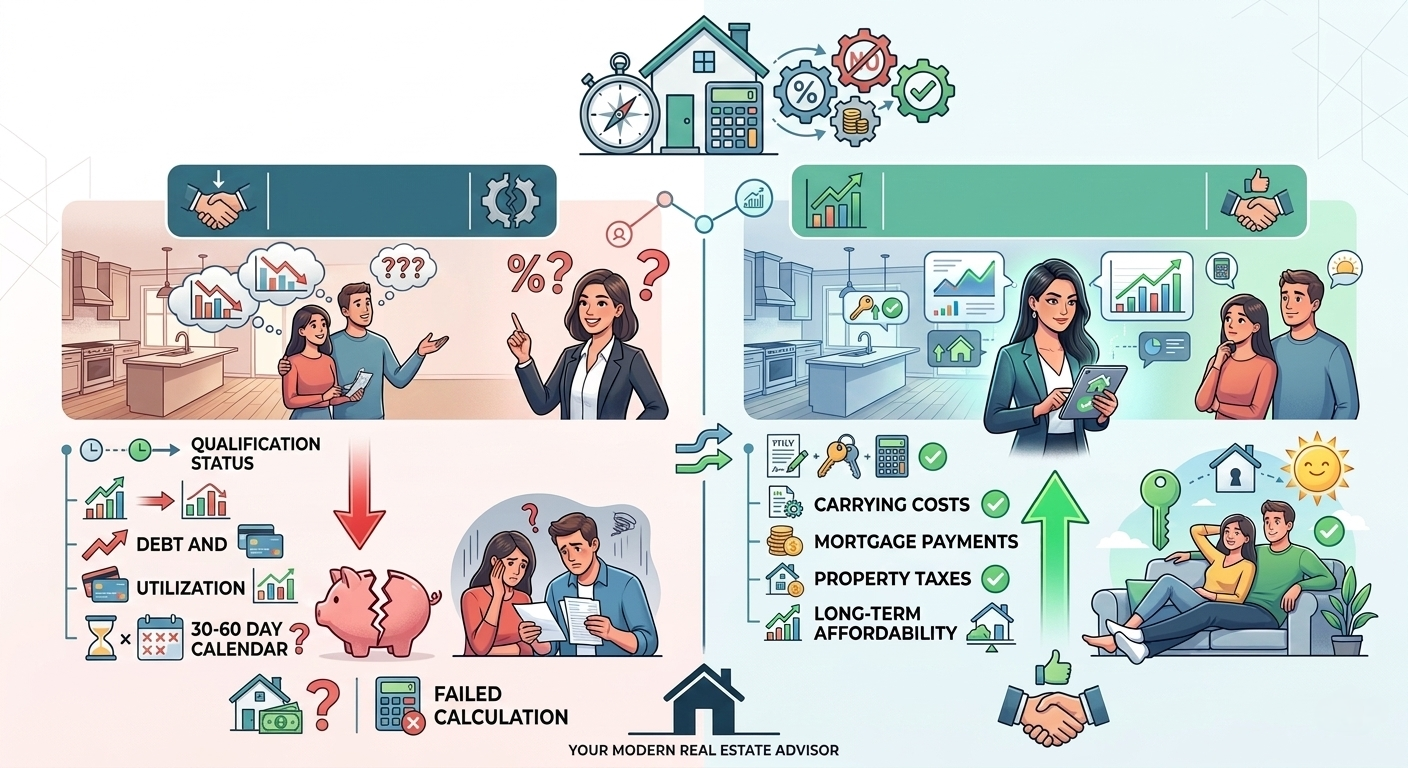
On the Mortgage Side: We build a long-term affordability plan — not just find you a rate. 

→ Payment comfort. 

→ Cash-flow clarity. 

→ Exit strategy.

You move forward knowing exactly what you’re stepping into.

That’s confidence — not impulse.


2. Information Overload (and Analysis Paralysis)

If you’re mentally exhausted from checking listings and reading rate predictions… you’re not alone. Being over-informed can actually keep you stuck. Scrolling isn’t strategy.

Here’s how we solve that: Instead of sending you 50 listings, I send you the top 3 that truly match your criteria and budget strategy.

Instead of vague mortgage timelines, you get a clear, step-by-step roadmap:

• What happens first

• What documents you need

• What to expect next

• What could go wrong (and how we prevent it)

Clarity reduces stress. Structure creates confidence.


3. Guarded Hope: “I Want To Buy… But Am I Overpaying?”

This is the biggest emotion in 2026. Clients want to move forward — but they’re cautious. 

And honestly? That’s smart.

With conflicting headlines about the Canadian housing market, it’s normal to feel “optimistically suspicious.”

Here’s what builds trust: 

• Deep-dive comparables — not surface-level app estimates

• Honest pricing conversations (even when it’s uncomfortable)

• Transparent mortgage projections — worst-case and best-case scenarios

• Real numbers, not guesses

When your mortgage and real estate strategy are aligned, the unknowns shrink dramatically.


What Actually Adds Value in 2026

Anyone can look up a house price online. What you can’t Google is interpretation, negotiation strategy, and calm judgment under pressure.

Here’s where we make the difference:

1. Translating Data Into Decisions

We turn rate updates and market stats into clear action steps.

2. Reducing Friction

From pre-approval to closing, we streamline the process so you’re not chasing paperwork or second-guessing timelines.

3. Being the Steady Hand

When the market reacts emotionally, we stay strategic — so you don’t make a decision you regret six months later.


Final Thoughts: Your Life Shouldn’t Be On Hold

The Ontario real estate market will always move in cycles.

But your family plans, your lifestyle goals, your financial growth — those matter more than a headline.

2026 isn’t about perfect timing. It’s about informed timing.

With clarity. With transparency.

With a financial plan that supports your next chapter.


Ready to start your 2026 home journey?

Whether you need:

→ A mortgage pre-approval strategy

→ A pricing review on your current home

→ Or a real conversation about whether now makes sense for you

Let’s build the plan properly — from both sides. You don’t have to navigate this market alone.

From Loan to Home — Your Trusted Path to Ownership. 🏡
Read

Beyond the Credit Score: How to Tell a Lender-Friendly Income Story (And Get Approved Faster)

I’ve been in this business long enough to see a pattern most buyers never expect. I’ve seen six-figure entrepreneurs get declined for mortgages. And I’ve seen modest-income earners get approved with zero stress. The difference was never the credit score. It was the paperwork story.

As both your Realtor and Mortgage Agent, my role goes far beyond submitting documents. My job is to make sure your financial story makes sense to a lender the very first time they read it.

Because here’s the truth:

👉 Mortgages don’t fall apart because of bad income. They fall apart because of unclear income. A smooth mortgage approval isn’t luck. It’s clarity, consistency, and strategy.


Why Lenders Care About Your “Story” (Not Just Your Numbers)

Lenders don’t meet you. They don’t know how hard you work. They don’t know your business potential or future growth.

All they see is paper. Your application is reviewed like a file in a courtroom—every number needs context, every gap needs an explanation, and every inconsistency raises questions.

If your documents tell a clean, logical story → approvals move fast.

If they don’t → delays, conditions, or outright declines.


The 3 Biggest “Approval Killers” I See Every Week

These are the most common mistakes that derail otherwise strong buyers—and how we fix them before they become a problem.

1️⃣ The Mystery Deposit

Large or frequent deposits that aren’t clearly explained immediately trigger lender red flags.

Why lenders worry:

Unverified funds could be borrowed money, undisclosed debt, or temporary cash inflows.

The fix:

I make sure every deposit is documented—transfers, bonuses, business income, or gifts. Gifted funds? We prep gift letters and source documents upfront, not last minute.

2️⃣ Credit Spikes Before Closing

New cars. Furniture financing. “Buy now, pay later” plans.

This is one of the fastest ways to kill an approval after you’ve already been pre-approved.

Why lenders worry:

New debt changes your debt-to-income ratios instantly—even days before closing.

The fix:

Simple rule: No new debt until you have the keys.

I walk clients through what not to do so nothing surprises underwriting.

3️⃣ The Income Mismatch

Your paystub says one number. Your T4 says another.

Your tax return says something else. That inconsistency makes lenders nervous—even if you earn more than enough.

Why lenders worry:

They need to understand which income is stable, ongoing, and usable.

The fix:

We proactively prepare a Letter of Explanation that clearly bridges the gap before the lender asks. No guessing. No back-and-forth. No delays.


The “Enough Info” Checklist (Not Overkill, Just Smart Prep)

Over-preparing can confuse a file just as much as under-preparing. Here’s what lenders actually want.

✔️ Employed Borrowers

• Recent paystub

• Employment letter

• T4

• Most recent Notice of Assessment (NOA)

Clean, consistent, and easy to approve.


✔️ Self-Employed Borrowers (Where I Truly Specialize)

Self-employed mortgages don’t fail because you work for yourself. They fail because the income story is inconsistent or poorly presented.

What lenders typically need:

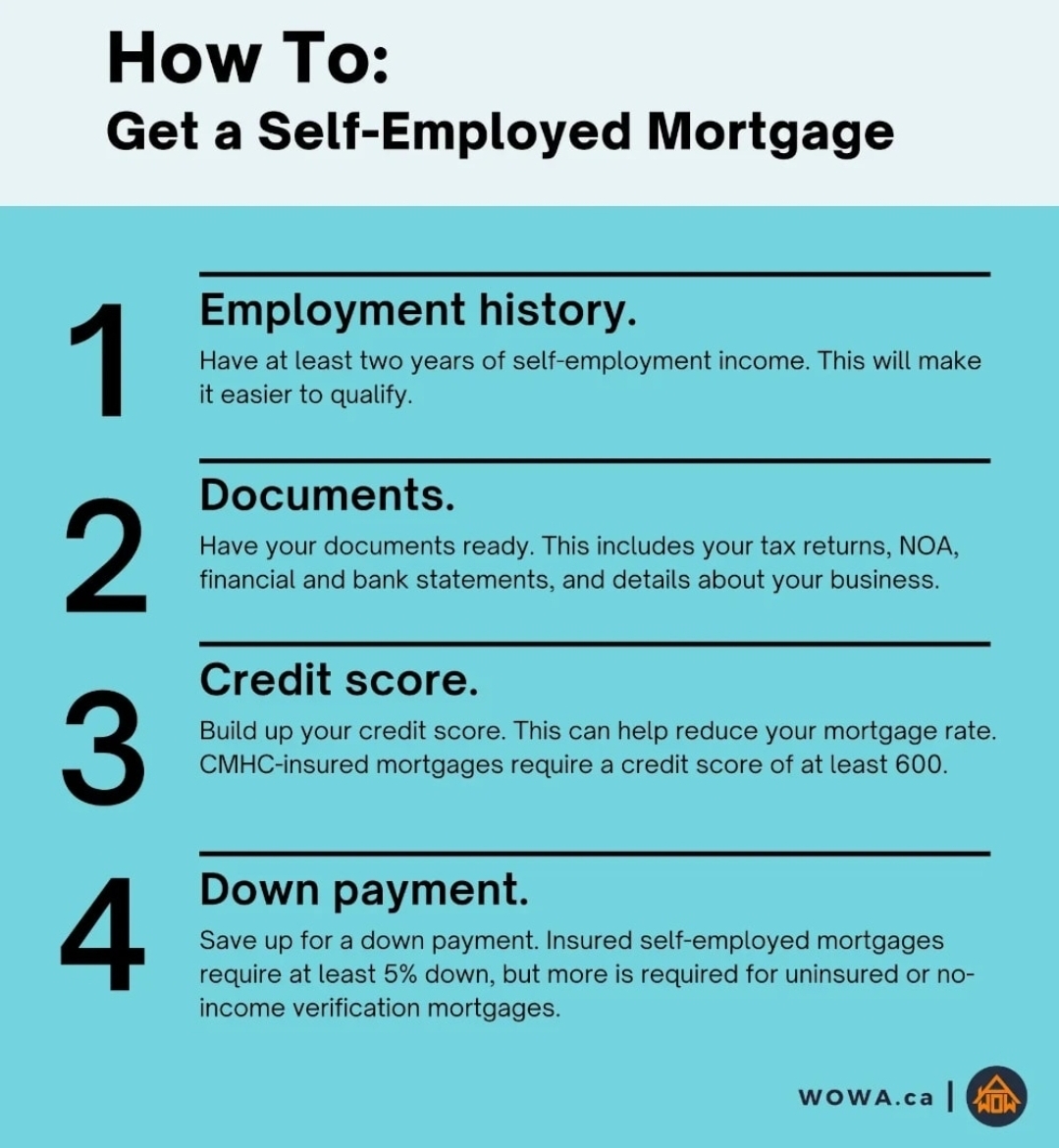
• 2 years of Notices of Assessment

• 2 years of T1 Generals

• Business financial context when required

This is where strategy matters most. We position income properly, explain write-offs intelligently, and highlight true earning power—without crossing lender guidelines.

👉 This is the BFS advantage: structuring self-employed files so lenders see strength, not confusion.


Why Having a Realtor and Mortgage Agent Matters

This is where my two hats save clients real stress—and real money.

Because I handle both the financing and the home search, I:

• Bulletproof your mortgage before you write an offer

• Ensure your price range is fully backed by lender logic

• Eliminate last-minute conditions and surprises

• Strengthen your offer in competitive markets

I’ve seen “messy” files turn into success stories—not by changing the borrower, but by organizing the story correctly.


Final Thought: Approval Favours the Prepared

If you’re planning to buy—especially if you’re self-employed, commission-based, or an entrepreneur—your mortgage approval starts months before you shop.

Your income doesn’t need to be perfect.

Your credit doesn’t need to be flawless.

But your story needs to make sense.

And that’s where I come in.

If you’re thinking about buying, refinancing, or just want to know how a lender would view your file today, let’s get ahead of it—before the pressure starts.

Clarity closes deals.


From Loan to Home — Your Trusted Path to Ownership. 🏡

Read
This website may only be used by consumers that have a bona fide interest in the purchase, sale, or lease of real estate of the type being offered via the website. The data relating to real estate on this website comes in part from the MLS® Reciprocity program of the PropTx MLS®. The data is deemed reliable but is not guaranteed to be accurate.